
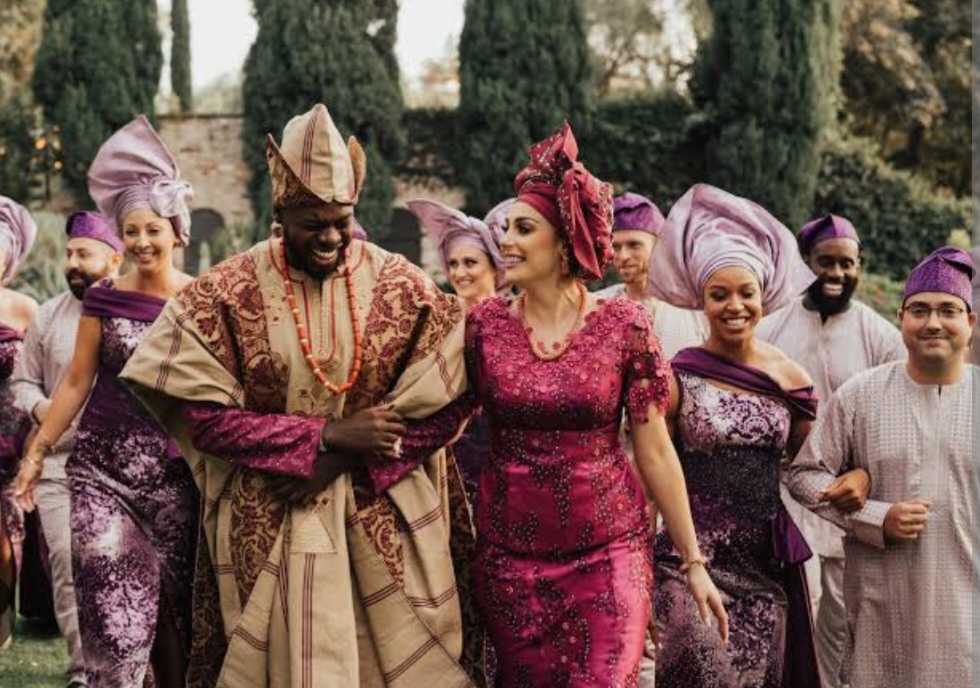
Nigeria is a multicultural country filled with many ethnic groups, who are all represented through different cultures and languages. Hence, the mode of performing cultural rights and norms differs amongst the ethnic groups.
With five hundred and twenty seven (527 ) spoken languages, Nigeria has a unique and cultural landscape. Marriage is performed and perceived differently between the ethnic groups, but the process of marriage between three of the largest ethnic groups definitely stands out and will be considered shortly.
The Yoruba, Igbo and Hausa/Fulani ethnic groups are considered as the major ethnic groups in Nigeria with unique customs and religious beliefs. When it comes to marriage, a common similarity among the ethnic groups is the lavish nature with which they are performed. Nigerian weddings are often expensive as the families of intending couples go all out to celebrate their children on their big day. This lavish nature is more common with the Yoruba’s and Igbos’s.
The Yoruba’s who are predominant in the Southwestern region of Nigeria are known to usually hold three weddings, formerly two with the now addition of a court wedding. In Yoruba culture, the major marriage process is the traditional wedding, where gifts are exchanged and where the families agree to be one by reason of their children’s union. This traditional wedding is usually the most expensive of the three common wedding processes.
It is usually a lively process that entertains its guests with traditional music, dance and local delicacies. The traditional wedding is followed by a church/mosque wedding where the couples receive religious blessings for the journey ahead. It follows the same but slightly different pattern with the Igbo and Hausa-Fulani groups. Both groups also have traditional weddings which they place a priority on, after which the other wedding processes follow.
The Igbos’s who are predominant in the Southeastern region of Nigeria refer to their traditional wedding process as Igba Nkwu. During this process, the bride is given a cup of wine to look and give to her groom. This is the most civil wedding in Igbo culture as it is held as more important than the religious or court weddings. Here the parents give their blessings and guests celebrate with the couples by dancing, share of gifts and spray of money.
The Hausa-Fulani’s who are predominant in the Northern region of Nigeria have their traditional weddings based on Islamic rites. Theirs is usually not as time consuming or as expensive as the Igbos’s and Yoruba’s. The wedding is also marked with celebrations, food and drinks. It is the only one of the three ethnic groups whose traditional wedding procedures are intertwined with its religious rites.
Asides the three processes mentioned above, several other ethnic groups have unique wedding customs that are however not popular to the average Nigerian. A few of the other unique wedding customs involves the Edo, Ijaw, Tiv and Ikwerre weddings held across the South-south region of Nigeria.
It is no wonder that whites and other foreigners enjoy attending our traditional weddings as a result of the music, local dishes and the exquisite cultural displays involved in them.



