
Did you know that intelligent quotients only contribute about 20% to your success in Life? Just look around, and see where the most brilliant people in your class are currently. This is also bolstered by research: 95 Havard students from the 1940s were interviewed, and it was discovered that the top students in the class were not more successful in terms of salary, job ranks and status in life or were they happier. That is not all; by age 16, you will likely have fully developed your intellect. Just like Martin Ariola from School Psychology & Anthropology, Fairfield University (2011) said, “On average, your innate intelligence peaks between the ages of 16 and 25 years old with a steady but small decline every year after that dropping off more sharply as we enter the age of senescence”. While I encourage people to take education so seriously because it can give you an edge, life is much more than the grade you graduated with. Family background, wealth, temperaments, relationships, and culture also play a part. But, emotional intelligence is a critical component that determines success.
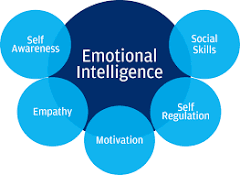
Emotional intelligence is the capacity to perceive, control and express one’s emotions and to decode and respond appropriately to the feelings of others. While IQ deals with what we learn, EQ is about how we apply them; IQ is tangible, EQ is intangible, IQ is technical, and EQ is psychological. Emotional intelligence starts with mastery of one’s life- accessing one’s feelings and adequately evaluating them. You can call it introspection, searching your own self, conducting a SWOT analysis on yourself and self-examining yourself. Until you can do this properly, you will not excel in interpersonal relationships- which deal with the capacity to discern and respond appropriately to other people’s moods, temperaments, motivations and desires. I was in a local community to visit a village head; everyone, including me, sat on the floor as it was the custom. You must genuflect and greet his “throne” whether he is there. Amid that, someone walked into the room straight to the village head’s seat. People immediately shouted at him, and he went to sit elsewhere- not on the floor but on the chair. He didn’t gauge the environment; he wasn’t aware of his social environment. Awareness is the first step in developing emotional intelligence- and social awareness- which should lead you to self-management and relationship management.
The benefits of emotional intelligence are many- the first is that you will be socially aware. This is the bedrock of the subject matter. This will lead you to have empathy and organizational awareness. When you see an underperformer at work, the first thing that comes to mind should be trying to understand the problem and helping him through it rather than sanctioning him. With EQ, You will exude confidence and not pride. You will not look down on people but have a fair estimation of their potential. Beyond that, you will be able to influence and coach people either at work or at home. I have often heard that people leave their bosses rather than leave their work, which I entirely agree with.




 THE EXECUTIVE GUIDE TO BETTER LISTENING