
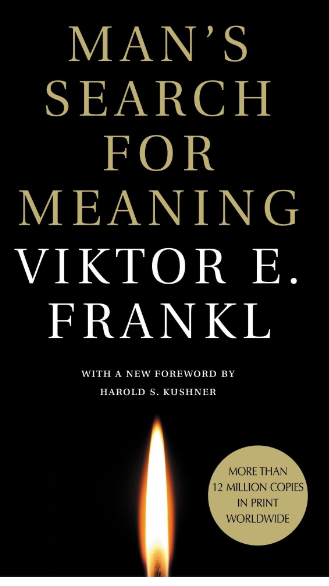
Excerpts from Man’s Search for Meaning by Vicktor E. Frankl
Man’s Search for Meaning” is a powerful memoir by Viktor Frankl, a psychiatrist and Holocaust survivor, that explores the human quest for meaning in the face of extreme suffering. The book is divided into two parts: the first part recounts Frankl’s experiences in Nazi concentration camps, including the loss of his loved ones and the brutal conditions of the camps. Despite the horrors he endured, Frankl argues that individuals have the capacity to find meaning in their lives even in the most dire circumstances. He emphasizes the importance of finding purpose and meaning as a driving force for human existence. Frankl also discusses the concept of logotherapy, his psychotherapeutic approach that focuses on helping individuals find meaning in their lives. Through his poignant reflections on his own experiences and his profound insights into the human psyche, Frankl delivers a moving message about the significance of finding meaning and purpose in life, even in the midst of immense suffering. “Man’s Search for Meaning” is a testament to the resilience of the human spirit and offers profound lessons on the importance of finding meaning in our lives to cope with the challenges we face.
How the memoir highlights the interplay of the intellect and the will with the sensitive dimensions of man.
Frankl’s memoir underscores how the intellect and the will are crucial aspects of human nature that can influence one’s ability to find meaning in life, even in the face of immense suffering.
Frankl describes how the intellect, through rationality and reasoning, can help individuals make sense of their experiences and find purpose in their lives, even in the midst of dire circumstances.
The memoir emphasizes that the will, the inner determination and resilience of an individual, plays a crucial role in coping with challenging situations and finding meaning despite adversity.
Frankl suggests that individuals have the power to choose their attitudes towards their circumstances, regardless of external conditions, and this power lies in their will.
The memoir highlights that the sensitive dimensions of man, including emotions, values, and relationships, are also significant in the search for meaning. Frankl describes how his emotional connections with loved ones and his sense of responsibility towards them gave him a sense of purpose and meaning during his time in concentration camps.
Frankl emphasizes that human beings are not just passive beings subject to external circumstances, but active agents who can shape their inner experiences and find meaning through their choices, values, and relationships.
The memoir illustrates how the interplay of intellect, will, and sensitive dimensions of man can enable individuals to persevere and find meaning even in the face of unimaginable suffering and trauma.
Frankl argues that finding meaning in life is a dynamic process that requires engagement of the intellect, will, and sensitive dimensions of man in a purposeful and intentional manner.
The memoir suggests that individuals can cultivate their inner resources, such as their mental faculties, values, and attitudes, to navigate through life’s challenges and find meaning even in the most adverse situations.
Frankl’s memoir ultimately highlights the holistic nature of human existence, where the intellect, will, and sensitive dimensions of man are interconnected and play a significant role in the pursuit of meaning and purpose in life.
In the simplest forms, these are sensitive dimensions of man.
Emotions: The range of feelings and affective experiences that individuals have, such as joy, sorrow, fear, anger, and love.
Values: The beliefs, principles, and ideals that individuals hold dear and that guide their thoughts, actions, and decision-making.
Relationships: The social connections and interactions that individuals have with others, including family, friends, communities, and society at large.
Subjectivity: The unique subjective experiences, perspectives, and interpretations that individuals have of themselves, others, and the world around them.
Identity: The sense of self, including one’s self-concept, self-esteem, and self-awareness, which shapes an individual’s understanding of who they are.
Spirituality: The personal beliefs, practices, and experiences related to matters of faith, meaning, and purpose in life, which can be a significant dimension of human sensitivity for many individuals.
Aesthetics: The appreciation and experience of beauty, art, and creativity, which can evoke emotional responses and contribute to an individual’s sense of sensitivity and meaning.
Ethics: The moral values, principles, and behaviors that guide individuals in their actions and interactions with others, and that can be an important aspect of their sensitivity towards ethical dilemmas and decision-making.
Sense of Wonder: The capacity to be curious, awe-inspired, and open to the mysteries and wonders of life, which can contribute to an individual’s sense of sensitivity and appreciation of the world.
Intuition: The innate and instinctive aspects of human perception, cognition, and decision-making that can inform an individual’s sensitivity and judgment beyond rational and logical thinking.
What can be said of how Viktor Frankl managed his sense of his identity while in the camp?
Based on Viktor Frankl’s memoir “Man’s Search for Meaning” and his accounts of his experiences in Nazi concentration camps, it can be inferred that:
Frankl maintained a strong sense of self-identity throughout his time in the camp, despite the dehumanizing conditions and atrocities he faced.
Frankl’s sense of identity was shaped by his profession as a psychiatrist, which gave him a sense of purpose and meaning even in the midst of extreme suffering. He saw himself as a healer and continued to fulfill his role by providing support to his fellow prisoners and helping them cope with their psychological challenges.
Frankl’s identity was also influenced by his relationships with his loved ones, particularly his wife. The thought of reuniting with her and the memories of their shared love kept him motivated and gave him a sense of hope and purpose.
Frankl maintained a sense of moral and ethical identity, adhering to his personal values and principles despite the harsh circumstances. He refused to succumb to the dehumanizing behaviors of the captors or to compromise his integrity.
Frankl’s sense of identity was also shaped by his spiritual beliefs. He found solace and strength in his faith, which helped him cope with the challenges he faced and maintain a sense of meaning and purpose in his suffering.
Frankl’s sense of identity was adaptive and flexible, as he was able to adapt to the changing circumstances of the camp and find meaning in different aspects of his existence, such as helping others, engaging in intellectual pursuits, or finding beauty in small moments.
Frankl’s sense of identity was closely tied to his sense of self-awareness and introspection. He reflected on his thoughts, emotions, and actions, and used them as a means of maintaining a sense of personal agency and dignity in the midst of extreme adversity.
Frankl’s sense of identity was also marked by a strong sense of resilience and determination. He refused to let the circumstances define him and actively sought to find meaning and purpose in his life, even in the face of immense suffering.
Frankl’s memoir suggests that his sense of identity played a significant role in his ability to persevere, find meaning, and maintain a sense of humanity in the dehumanizing environment of the concentration camp. It demonstrates the power of personal identity in shaping an individual’s mindset and behaviors in the face of extreme challenges.




 AWOL & Ajaokuta Steel Mill – April 21 to 23.