
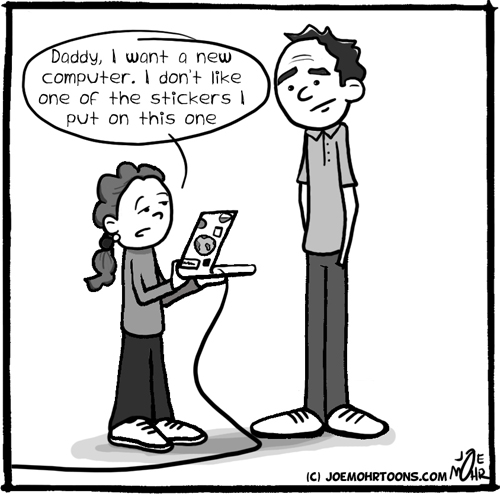
How often do we find ourselves saying “They don’t make things like they used to” or that the older version of a machine or electronic device is more “rugged” than the newer one? Thanks to modern science, products can be produced to be more durable than they were in the past. However, to sustain profitability companies must find ways to drive replacement purchasing. This is usually done by introducing new versions of the existing product with some level of restyling and enhancements to relevant features and market them in a way that existing owners would want to buy.
In many instances these enhancements and restyling do not contribute materially to the functionality of the product but successful companies create an emotional and social bond with their customers which make the decision to upgrade less objective or fact based and more emotional.
“Planned Obsolescence” is a business concept were a company or creates a desire in its customers to own something a little better, a little sooner that necessary – Boke Stevens. One of the earliest examples of this is in the light bulb industry were in the mid-1920s to 1932, the major electric bulb manufacturers formed a cartel to stop any product development that would lead to bulbs t that could burn for more than 1,000 hours. Benard London an esteemed American Real-estate Broker in 1932 wroth a paper titled “Ending the Depression Through Planned Obsolescence” as is credited with coining the phrase.
Manufacturers to ensure customer regularly buy new goods produce products which they know would only last for a limited time. This product life is usually deliberately determined and may not be based on any technological or material constraints.
A common application of this is in the introduction of disposable products. Products like dippers, printer ink cartages, pen etc. have all become disposable. While these promise convenience and ease they drive a business need.
Updated styling is used in many industries, in the 1950s, General Motors realized that their business would be adversely affected by the strides they had made in advancing the automobile technology. In response they started restyling the body work and shape, radiator grills and lights every few years to encourage users to replace their cars more often. This birthed the now widely accepted practice in the industry. Even though modern car engines can last over 400,000kms which roughly translates to 15 years driving in Nigeria on average, the industry drives higher sales by creating an impression of 4 year life through warrantees, insurance and financing arrangements. Also by restyling every 2 years they encourage drivers to replace their vehicles.
Phone manufactures also use this business strategy by a combination of restyling and new features. This encourages users to replace still usable phones and tablets to keep up with the introduction of new versions. In a highly competitive market, a sense of competition further reinforces a sense of value or any new feature regardless of its usefulness.
Another variant of this is status anxiety. Football teams for instance launch new sets of kit each year knowing that their fans would want to identify with the team and by replicas.
As business owners and decision makers we may believe built to last is an essential maxim for production however many successful businesses have shown that business success can be driven by driving repeat purchase by adopting planned obsolescence strategies. It is up to us in our decision making to guard our businesses against unnecessary replacements on the basis of such gimmicks and also drive our turnover by taking advantage of opportunities to deploy planned obsolescence.



