
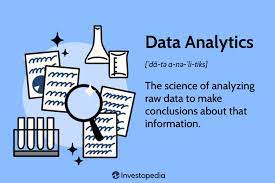
Data analytics helps us simplify large and complex data to extract information that can be used to make informed decisions in our various businesses or organisations. This is becoming increasingly important for professionals across a wide range of industries. It involves the use of statistical methods, algorithms, and other analytical tools to extract insights and knowledge from data
Generating data is one thing and the proper analysis is what helps to solve problems. As we operate in a fast-paced and data-driven business environment, data analytics has become an essential tool for companies to gain a competitive edge.
In many professions, it helps to make better decisions and improve efficiency.
Data analytics can be used to make business decisions in various ways. Some of which are:
- Predictive Analytics: Predictive analytics is the process of using statistical algorithms to analyse historical data and make predictions about future events. By using predictive analytics, companies can make informed decisions about things yet to happen and work to make it a positive outcome. Things like product demand, customer behaviour, and market trends etc, are areas we can use this type of analysis to determine.
In healthcare, it can be used to identify trends and patterns in patient data, which can help doctors and other healthcare professionals make more accurate diagnoses and develop more effective treatment plans.
- Customer Analytics: It involves using data to understand customer behavior and preferences by analyzing customer data. With this information, for marketing, it helps companies better target their marketing efforts and have effective campaigns to improve customer satisfaction.
- Operational Analytics: Operational analytics involves using data to optimize business operations. By analyzing operational data, companies can identify inefficiencies, reduce costs, and improve productivity.
- Financial Analytics: Financial analytics involves using data to make informed financial decisions for the business. By analyzing financial data, companies can identify areas where they can reduce costs, optimize investments, and improve profitability. It can help professionals identify market trends and make better investment decisions.
- Risk Analytics: Risk analytics involves using data to identify and mitigate business risks. By analysing risk data, companies can identify potential risks and develop strategies to mitigate them.
Understanding data analysis is a complex one yet very important skill.
- Learn the basics: Make sure you have a good understanding of statistics and mathematics.
- Practice: The need to practice cannot be overemphasized. It should also entail practice on real data sets. Start by working on small data sets and gradually move on to larger and more complex ones. Practice your skills on a variety of data sets to gain solid experience.
- Use visualization tools: Visualization tools like Tableau or Power BI can help you analyze and present data in a more effective and engaging way. Learning to use these tools can improve your ability to communicate insights to stakeholders.
- Collaborate: Collaborating with others can also help you develop a better understanding of how to work with data in a team setting.
- Stay up-to-date: Data analysis tools and techniques are constantly evolving. Staying up-to-date with the latest developments in the field can help you identify new opportunities and stay competitive in your profession.
- Seek feedback: Getting feedback from others can help you identify areas for improvement and refine your skills. Seek feedback from colleagues, mentors, and other experts in the field to help you improve your data analysis skills.
We need to hone our analytical skills and cannot be good at it if we do not practice.


 A Summary of Screwtape’s letter