
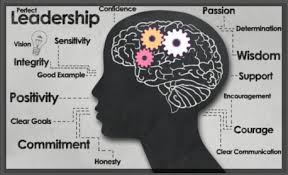
NHB is an important elective in the LBS MBA programme. It teaches us as executives to understand the nature of man. It initially seem vague, but I am beginning to appreciate and understand the course as it teaches human behaviour. This course further enlightens us as #MMBA4 executives on how to reason logically and make decisions accurately without being irrational.
The nature of humans has been a topic of philosophical and scientific inquiry for centuries. While there is no single answer to this question, many scholars have put forward theories that attempt to explain what makes us who we are.
One of the most popular theories of human nature is the idea that we are inherently social creatures. This theory suggests that humans have an innate desire to connect with others and form relationships. This is evident in the way we form families, communities, and other social structures. We also have a natural tendency to form hierarchies and to seek out leaders to guide us.
Another theory of human nature is that we are driven by our desires and needs. According to this theory, humans are motivated by a variety of factors, including basic survival needs like food, shelter, and safety, as well as higher-level needs like belonging, esteem, and self-actualization. This theory is often associated with the work of Abraham Maslow, who proposed a hierarchy of needs that humans must fulfill in order to be happy and fulfilled.
Another popular theory of human nature is that we are inherently rational beings. This theory suggests that humans are capable of logical thinking and that we use this ability to make decisions and solve problems. This theory is often associated with the work of philosophers like Aristotle and Immanuel Kant, who believed that rationality was the defining characteristic of human nature.
However, these theories are not without their critics. Some argue that humans are not inherently social, but rather learn to be social through culture and upbringing. Others suggest that humans are not purely rational, but are influenced by emotions and biases that can cloud our thinking.
Moreover, recent research in neuroscience and psychology has challenged many of the traditional theories of human nature. For example, studies have shown that humans have a tendency towards irrationality and bias, which can sometimes lead us to make poor decisions. Additionally, research has shown that our social behaviors are not purely innate, but are heavily influenced by cultural and environmental factors.
Despite these challenges, it is clear that humans are complex creatures with many different facets to our nature. We are social beings, driven by a variety of needs and desires, and capable of both rational and irrational thinking. Understanding the nature of humans is an ongoing pursuit, and one that will continue to be studied and debated for many years to come.




 Human and Animal Behaviour