
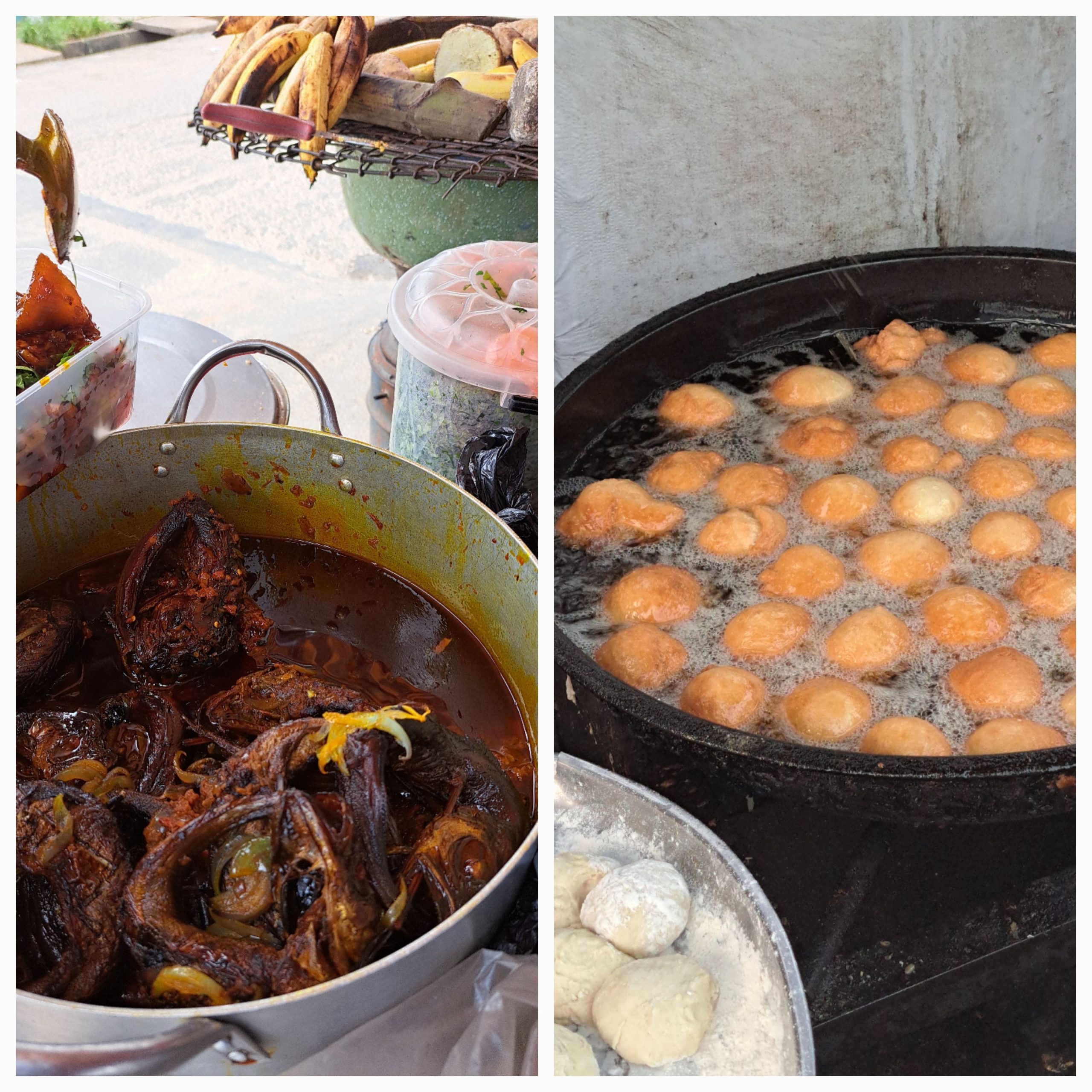
Street food, as its name suggests, is food that is sold on the street, in an open market, or in a park, and sometimes it is hawked. Street food has been part of different societies for years, from Nigeria to China, Colombia, Lebanon, and so on. Street food hawking and selling are very common among low- to medium-income earners. Street food ranges from finger foods to sometimes full meals. Different governments have tried to minimise street food due to a variety of reasons such as illegal use of public space, safety, and health, and sometimes they cause traffic when people try to park their cars on the streets to make their purchases.
However, street food has become a cultural phenomenon that cannot be easily extinguished. Due to the poverty level in so many communities, it’s one way to get cheap meals for the buyer and a way to make a living for the sellers. The total abolishment of street food without addressing the underlying issues will bring great suffering to a lot of people. I would also argue that street food gave most FMCGs the idea for the “sachetization” of different products; however, the poverty situation of the country with a lot of people falling into the low-income bracket amplified it.
Street food differs from one community to the next, even within the same country. Growing up in Lagos, we had access to different street foods ranging from snacks like buns, puff-puff, egg rolls, Kokoro, guguru, epa, boli, and so on, to complete meals like ewa agonyin, asaro, amala, rice and stew, and so on. Little has changed over the years; in fact, we now have street vendors that hawk fruits and vegetables in wheelbarrows. Some fruits and vegetables that were considered exotic and premium are now available to the general public due to the activities of these street hawkers and, in particular, the farmers. Some street foods are time-based; you will only get them at a particular time of the day. Examples are suya, which is often sold at night, and boli, which is sold at noon.
Some people have tried to modernise street food, with the selling point being a legal space and better food safety. However, the experience doesn’t seem to be the same as regular street food. I agree that food safety is a major concern. A lot of people have danced with diarrhoea after consuming street food. While the danger of health compromise is a possibility, some people will argue that it builds up the immune system.
People that grew up consuming street food hardly ever turn their backs completely on it, no matter how many income levels they have reached. The sight of roasted corn in the corn season, boli and epa, the hot fried puff-puff or buns, the plantain chips, and gala in traffic are delightful temptations that most people will indulge in once in a while. Street food will give you great value for money and contentment. Do you indulge in street food? Aside from suya, what is your go-to street food?




 My experience as a first-time blogger in an MBA class