

In our Analysis of Business Problems class, we were asked to analyze the above case study using the PROACT method of analysis. Here is my analysis and decision:
Case Study Overview
ENOVE, a subdivision of Groupe Bismuth, was devising a growth plan in Tunisia, their home country, amidst an unstable political and economic climate. Tunisia had been the origin of the Arab Spring, a series of political revolutions that began in 2010 and swept through the Mediterranean region for five years. While Tunisia was making progress towards a democratically elected government, the transition was challenging, and the country faced a setback of 10 to 15 years in terms of economic development. The nation had been affected by years of systemic corruption followed by sustained growth in manufacturing, tourism, and education, leading to a governmental vacuum. As a result, workers began demanding better working conditions for the first time, with little oversight on customs, labour, or taxation, and the persistent threat of terrorism added to the tension.
Problem Identification
Bismuth, the CEO of ENOVE had to make a crucial decision whether to expand the business within Tunisia or follow the precedent set by many other companies and relocate the manufacturing operations to a more stable environment, such as Morocco. The decision was particularly challenging for him as he grappled with these contradictory viewpoints. On one hand, he was a patriotic Tunisian who wanted to contribute to the revitalization of his country. On the other hand, he was invested in securing the ongoing expansion of his business.
Decision Options
- Expand the business within Tunisia,
- Relocate the manufacturing operations of the company to a more stable country.
Analysis
Both decision options present opportunities and threats for the business sustainability. As highlighted in the case, Tunisia is an emerging country and these inherent issues are also seen in other emerging economies. Using the PEST Analysis to assess the external environment, conclusions were made on the viability of ENOVE to continue manufacturing operations in the Tunisia. See Chart 1.
Chart 1: PEST Analysis
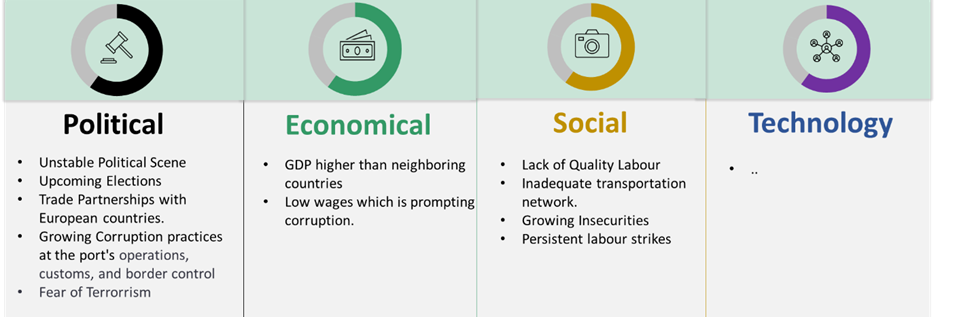
Foreign Skepticism Still Abound: The political uncertainties in the country continued to fuel skepticism among many foreign business leaders about its future prospects. The country has strived to foster foreign trade through trade zones and bilateral trade agreements with countries and regional bodies throughout the area serving as a catalyst for interest and investment in business operations within the country. However, the outcome of the upcoming election will determine the number of foreign businesses that will continue to reside in the country.
Economic Growth Prospects: Tunisia had begun to rebound from the aftermath of the revolution and the subsequent setbacks that had ensued in both the political and economic arenas, as reflected by the growth in gross domestic product. Furthermore, Tunisia’s GDP is relatively higher than its neighboring countries like Algeria, Libya, and Morocco. However, this does not directly impact ENOVE because a bulk of its goods are exported for sale.
Low quality and insufficient infrastructure: Tunisia has a developing network that allows for multiple modes of transport. However, road, rail, and air modes of transportation all need sufficient to cater to the growing economy. The condition of the ports is currently below global standard and this is deemed unfavorable for businesses that rely on efficient transportation network such as ENOVE. Notably, expansions and upgrade are not expected to happen soon due to the political unrest. Hence, businesses will continue to use the existing structures.
Unavailability of Skilled/Quality Labour
The country offers a large pool of low-cost labour due to its young and educated population. However, it was difficult to find specific skilled quality labour to suit advanced roles, most graduates are not creative and do not take initiatives on the job. Case in point, Bismuth stated it took him months to employ a chemist for this plant. On the positive side, the Tunisia’s human development index has been increasing steadily compared to other European developing countries. The issue nonetheless persists in the quality of labour.
Growing and Persisting Corruption Practices
Corruption in Tunisia’s public sector, particularly in port operations, customs, and border control has heightened and these are areas that ENOVE business is directly impacted by. This is creating numerous negative consequences, including increased costs for companies, slower economic growth, and a lack of trust in government institutions. The fact that Tunisia ranked 79th out of 175 countries in the 2014 Corruption Perceptions Index is concerning and highlights the need for systemic change. It is also unfortunate that this corruption creates an uneven playing field and allows cheaper goods to flood the market, underselling domestic products. All indications point to the new government in the upcoming elections to take all these issues into consideration.
Decision Recommendation
Peter Bismuth should Expand in Tunisia
Suggested Alternatives
- Bismuth should delay the expansion strategy till the Post Election period. Thereafter, he can tune his decision considering how the new administration is undertaking solving the new issues affecting the country
- Make further research on the countries the ENOVE manufacturing operations can relocate to without impairing the sustainability of the business.



