

I could not read through the Target Corporation case twice. I wish I could give the details of Brian Cornell’s context and problem, but I did not study it enough to have the details off hand. I do however remember that Cornell needed to decide whether to close the operations of Target Canada or continue it with an optimized model. Target Canada and Target USA are subsidiaries of the Target Corporation; whereas the latter, which is the older, has been making profits, the former has been making losses since it was launched. These losses were driven by a combination of differences in consumer behavior between the US and Canadian markets, operational issues around inventory management, and competitive forces.
Dr. Yetunde Anibaba led the class gently as we defined the decision problem and objective and outlined our criteria. She asks, “Who is in the problem? What is his role? Why Is it important to note that he is the first outside hire for that CEO role? What are the consequences of closing Canada’s operations?” On and on we went until we could outline critical elements to enable our decision-making. We could not finish the case before the time for the Analysis of Business Problems class came to an end. We were to complete the analysis using the blocks already put in place by this joint effort. Thursday, April 13 was done, and I packed my things and went home. It was a long day.
Saturday morning was quiet and sunny, but I did not notice. I sat up for the most part of the morning, and then a few hours in the afternoon attending classes. We started with a mid-semester review for the Analysis of Business Problems, then mid-morning and late afternoon Corporate Financial Accounting classes. Most of the ratios we worked on were different from the ones we had last week – Net Operating Working Capital (NOWC), Net Operating Long-term Assets (NOLTA), Net Operating Assets (NOA), Net Financial Obligations (NFO), Financial Leverage (FLV), and others. My group missed the point in very many of them, as we did not account for the words ‘operating’. Apparently, we needed to identify accounts that fall into ‘operating’, and not just lift summed values.
Because of my ignorance of what constituted operating or non-operating accounts, I was lost for the most part of the class. I only hoped to review the spreadsheet and balance sheets alone after the class. It was a sad class for me. When the classes ended and I had addressed some domestic affairs, I took up my phone and called two classmates to ask how they were coping and what approach is helping them cope with and understand the classes. Their responses were helpful and encouraging.
There was a twenty-minute session after the day’s classes with which our program manager, Mr. Kayode Oluwalana announced that he was being replaced by Mr. Emmanuel Ugenyi. The move was to reduce Mr. Oluwalana’s workload as he was already in charge of two other classes. It was a sad time for members of the class, as he is a compassionate, supportive, and helpful program manager. He was a servant leader who was completely committed to his work and to us. Although several of us voiced our displeasure over the change, we had to pledge our willingness to work with Mr. Ugenyi and tried our best to welcome him warmly.




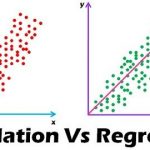 Correlation and regression: what are the similarities and differences?