
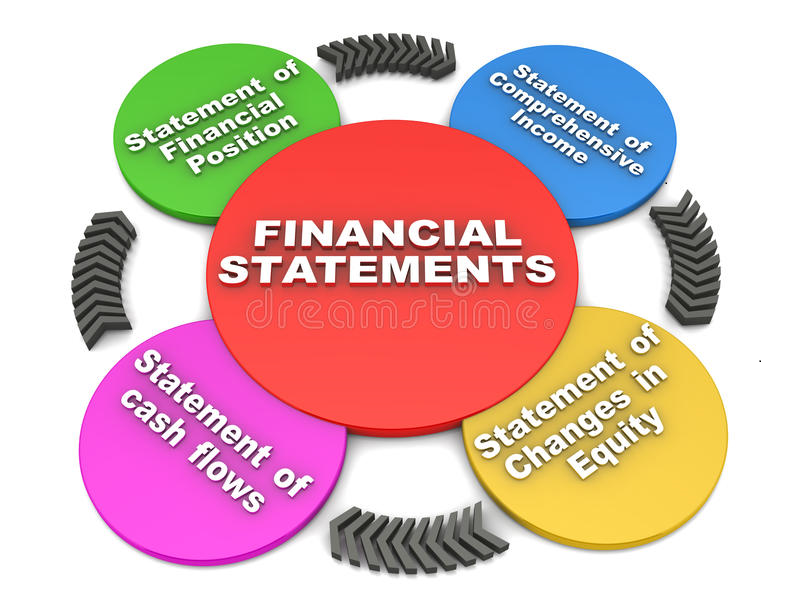
Financial statements are documents that provide useful information about a company’s performance, liquidity, health, and position. Before now, I assumed when you said financial statements you were referring to one big accounting document with data on financial activities, it didn’t quite occur to me that there were different types of financial statements, although I had heard about them individually and had an idea of what they were. There are four types of financial statements; Statement of comprehensive income, Statement of Financial Position (Balance Sheet), Statement of Cash Flow, Statement of changes in equity and Notes to the financial statement three of which usually form part of a company’s financials and I will be briefly explaining what they are and the information they provide.
- Statement of Comprehensive Income- This statement shows the all the income and expenses of a Company over a given period (usually, twelve months ) and it is also known as a profit or loss statement. As the name implies it tells you whether a company has made a profit or loss and how much of it during a specific period. In the statement of Comprehensive income, you will find a segment that shows the revenue the Company has made from its business activities i.e., sale of its products and services as well as the cost of the products and services. Another segment shows the operating expenses which is all the incidental costs of doing business such as Salaries and Wages, utilities etc and then a segment that shows the net income or loss made after expenses are deducted from revenue.
The income statement is an important financial statement as it provides information about the company to help stakeholders assess the profitability of the company, provide understanding into their sources of revenue, and help identify cost saving avenues and the cost structure to aid decision-making.
- Cash Flow Statement- This financial statement shows how much cash a company makes form its operations and spends in a period. It records the cash inflows and outflows of the company, and it has three main segments based on the main categories of a company’s activities, operating activities, financing activities, and investing activities.
Under operating activities it details the cash flows concerned with the core business operations of the company such as the cash paid for purchase of goods or received from the sale of goods and services, In the financing activities segment it shows the cash flows related to how the company finances its operations such as cash paid out or received for loans etc and in the investing activities segment it shows cash flows concerned with the investing activities of the company such as the cash paid in acquiring equipment or other assets . This statement provides information and insight into a company’s activities by revealing important information on how much cash it generates, its activities and how much it spends on those activities. It is useful for assessing a company’s liquidity, solvency and cash flow trends and can also be used by stakeholders to assess a company’s financial health.
- Statement of Financial Position (Balance Sheet) – This statement is a record of a company’s financial position at a specific time, and it details the Company’s assets, liabilities and equity. It has two main segments which is the Assets segment and the Liabilities and Equity segment. The assets segment shows the company’s resources such as cash and cash equivalents, inventory, property, plant and equipment etc. The liabilities segment shows the commitments of the company to others such as amount owed to suppliers, debt providers, and regulators. While the Equity relates to amount contributed or due to shareholders. It provides vital insight that can assist stakeholders to assess a company’s financial position, financial leverage, liquidity, solvency, and information useful for financial analysis for decision making.
- Statement of Changes in Equity– This shows the changes in a company’s equity during a given period. It provides information on the company’s interactions with its owners (shareholders) which can be in form of contributions made by shareholders or dividend received by shareholders at a given date, new shares issued if any, as well as the net income or loss for the period etc.
In conclusion, although each financial statement provides information on different aspects of a business, they are all useful for providing vital information to stakeholders on the financial position and performance of a company for decision making.




 LBS Series (final part)