
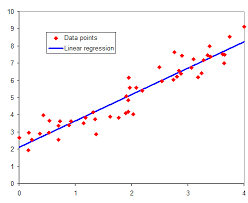
Regression analysis is a statistical technique used to investigate and model the relationships between a dependent variable (also known as a response or outcome variable) and one or more independent variables (also known as explanatory or predictor variables). It is commonly used in various fields, including finance, economics, social sciences, engineering, and data analytics
The primary goal of regression analysis is to develop a mathematical equation that describes the relationship between the variables. The equation can be used to predict how changes in the independent variables will affect the dependent variable. Regression analysis examines the direction, strength, and significance of the relationship between variables.
It is an essential aspect of data analytics because it allows analysts to determine how one variable affects another. Regression analysis helps analysts to derive insights from data and make decisions based on those insights.
The importance of regression analysis in data analytics cannot be overstated. By using this method, analysts can identify patterns and relationships in the data, which can provide a better understanding of the underlying processes driving the data. This information can then be used to make better decisions or improve business processes.
Regression analysis is a powerful statistical tool that can help researchers, analysts, and decision-makers investigate and model complex datasets. It is often used for predictive modeling, hypothesis testing, and identifying trends and patterns in the data.
Regression analysis is a widely-used statistical technique in data analytics to investigate and model the relationship between a dependent variable (also known as a response variable) and one or more independent variables (also known as explanatory or predictor variables). The aim is to find the best form of mathematical equation that describes the relationship between the variables so that predictions or estimations can be made about the dependent variable.
Regression analysis can be used in various ways in data analytics, including:
1. Predictive modeling: Using regression to build a model that predicts the value of the dependent variable based on the values of independent variables.
2. Hypothesis testing: Using regression analysis to test whether there is a significant relationship between the dependent and independent variables.
3. Correlation analysis: Regression can be used to calculate the correlation coefficient between two or more variables, which helps to assess the strength and direction of the relationship between the variables.
4. Time series analysis: Regression can be used to identify and model long-term trends in time series data, such as stock prices, sales figures, or temperature records.
Regression analysis is a powerful tool in data analytics that allows analysts to understand the relationship between variables, make predictions, and identify trends in complex datasets, which is especially useful in businesses and decision-making processes.
Regression analysis can also be used for predictive modeling. By using regression analysis to identify the relationship between variables, analysts can create models that predict how changes in one variable will affect others. This can be extremely useful for forecasting future trends or identifying potential problems before they occur.
Overall, regression analysis is an essential tool for data analysts who want to derive insights from data, make decisions based on evidence, and create predictive models to guide future actions.



