
The mobile phones and usage of data became fundamental in our daily activities, be it for social connections or business.
To ensure the best services, coverage and quality of data; there are certainly people working round the clock to ensure the highest uptime possible while the users are enjoying the uninterruptible service. Keeping in mind that the telecom warriors are fighting the field challenges non-stop and risking their lives in certain locations to bring up their sites.
In the upcoming paragraphs, we will list the major components related to passive equipment on a telecom site. As well as the day-to-day activities performed by the operation teams in charge of corrective and preventive maintenance.
The conventional solutions were basically designed on having either utility or diesel generator powering the site at all times. With the industry developments, telecom operators shifted into hybrid solutions whereby the generator will rest for a period of time while the backup batteries combined with solar (where available) are carrying the tenant loads (telecom equipment).
In order to avoid early aging and lifetime degradation of the assets, the field engineers in line with their supervisors must perform periodic preventive maintenance and in case of any failure, corrective actions must be done in due course.
In addition to that, ensuring compliance in all activities will protect the company’s image in front of their clients.
Diesel Generator
Be it the main source of power in our environment, the necessity of periodic checks is key. While feeding the generator with clean diesel and high-grade oil.
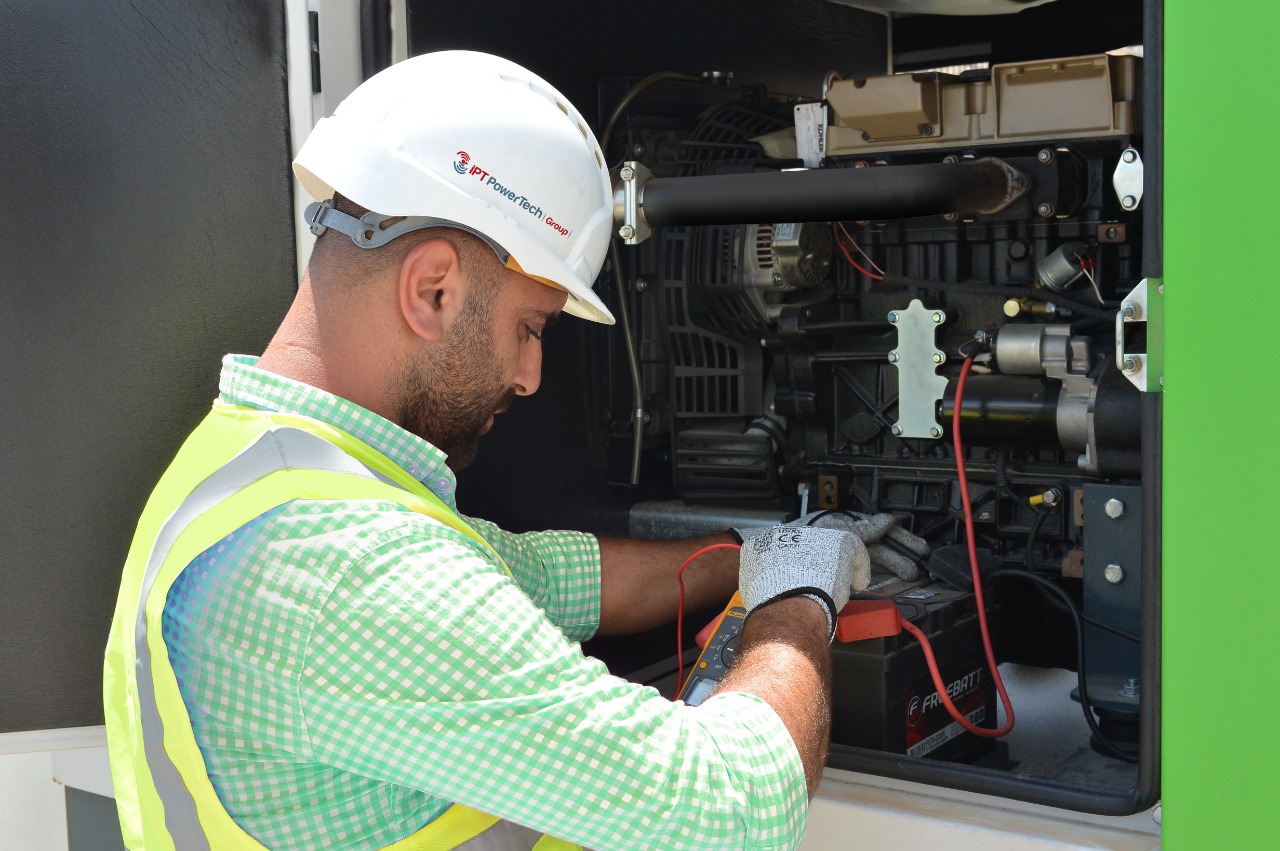
During every visit to a site, the teams must check the cranking battery voltage, charging alternator and battery charger to make sure that the Diesel Generator (DG) will be ready to kick start at any point in time. The DG is equipped with many sensors and switches such as relays, fuses, controllers, thermostat, oil switch and coolant which operate to protect the engine from any alarm and avoid complete knock-off. These parts must not be disconnected or bypassed, otherwise the DG will be at risk.
Since we all know the quality of diesel reaching our tanks. It is definitely imperative to clean / flush the tanks, drain the water separator and clean the fuel hoses periodically.
Every 250 hours of operation, the DG require servicing. Performing this activity on time and properly will prolong the DG lifetime and avoid unexpected shutdown. This service includes the replacement of oil, fuel filters. Draining the old black oil completely and replace it with new / certified oil. Clean the air filter (frequency of replacement depends on the environment surrounding the site). Adjust the fan belt. Clean the radiator fins and top-up the coolant to the maximum level.
General Check
Solar Panels must be cleaned Periodically (depends on the location / region). Any broken panel to be changed. The solar structures must be checked and tightened every 6 months. All Surge Arrestor cartridges must be checked every visit and replaced (if burnt) to avoid equipment damages due to lightning. Site Grounding (Earth System) must be checked periodically. Cutting trees must be performed periodically to avoid solar panels shadowing. Back-up Batteries’ voltages to be measured and perform self-test every 6 months. Those records must be kept and communicated timely; to be used for warranty claim (in case of manufacturer defects) or to forecast the replacement (based on their degradation trend). The ventilation and Air-conditioning systems should be working all times to maintain the batteries lifetime. All Connections must be checked to ensure no loose connections (Batteries, DG, Distribution Panels and Combiner Boxes).
Remote Monitoring System (RMS)
This tool is our eyes on site for manager sitting behind their desks. It allows live monitoring and data pullout real time. While the camera will activate in case of any movement within the site’s premises and trigger alarm for attention and will mobilize escorts to rescue the assets once confirmed that intruders are active on site without having prior approval for an access by the teams in charge. The teams while on site should confirm that the RMS is powered and communicating with Network Operating Center (NOC). In the NOC, there are nodes active and live round the clock (operating in shifts) to flag any outage or anomalies on sites and trigger a call to the field guys for immediate attention and action. The RMS include a gate magnet which can be activated remotely (open and close). The RMS records all readings and measurements on site which are used for data analysis related to solutions performance and behavior. The same data will be used to predict any possible future failure (such as DG temperature, diesel consumption and backup time).
In the end, having stable grid power in country will definitely shrink a lot of outages and interruptions. And will reduce the cost of operation (mainly diesel supply and generators replacement) which will positively impact the user by having stable services. Hence, the operator can review their services’ selling prices. Above are a summary of my daily struggles. What about yours?




 Divisionalisation and performance evaluation