
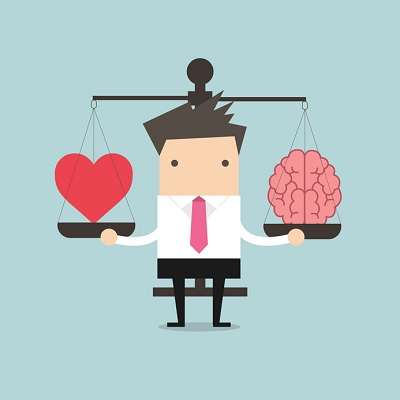
Psychological traps and biases! These are distortions, errors, or prejudices in decision making that affect our rational thinking and sometimes lead to poor decisions. These traps are typically subtle and sneaky and a lot of times you may not be able to identify when you are making decisions based on a bias. These biases or traps are not exclusive to a certain category of people or based on inexperience or age etc.
They apply to everyone including the most skilled decision makers, professionally or in everyday life and are found in the most trivial every day decision making as well as the most sophisticated. There are several but some of the most common ones include.
- Anchoring Bias- This is the inclination to rely mostly on the first piece of information received regarding a situation or event. This makes the individual with this bias continue to use this information as a reference point for decision making even after the situation has changed or even when the information has been found to be untrue or irrelevant. For example, when negotiating for an item for purchase, the seller may initially set a ridiculously high price so as to raise your expectations (i.e. anchor the buyer) such that when you eventually negotiate a lower price you will have the feeling of having paid a fair price for the item. However, that seemingly lower price will still be higher than the fair price for that item. Another fascinating example that may resonate with fans of legal and Crime TV is in the Jury system when a lawyer lets an information that he is not supposed to mention slip out in the cause of interrogating a witness or presents an information on his client(whether true of false) as fact and then the judge instructs the Jury to disregard the information, the jury usually is unable to disregard this information in their decision making even after they have received contrary evidence.
One way to counter this bias is to independently investigate the situation prior to making a judgement irrespective of any information you may have received from related parties.
- Sunk Cost Bias- This happens when you continue to spend resources on a plan that is clearly failing or an investment that is no longer viable on the basis that you have already spent so much and you need to do all you can to recover what you have spent(time, money etc), or sometimes because you do not want to be seen to be a failure or someone that gives up. This bias or mindset will typically lead to more loses and sometimes worse consequences. For example, when you have invested in a particular financial investment and your funds have basically been eroded but you keep investing more money with the belief that it will eventually turn around and you will recover all even though there is no proof or basis to that belief. Or when you make an error in judgement and do something wrong and then you keep doing more bad things to cover the initial one just so that you are not caught rather than immediately retracing your steps and facing the consequences of your initial action you keep digging a bigger hole.
There are several others I find interesting such as Confirmation bias- when you only look for evidence to support your point of view and beliefs ignoring all the other evidence to the contrary. Others include, Framing Bias, Groupthink, Hindsight Bias, Recency Bias etc.
The fact that we are constantly faced with these traps we cannot see almost every minute of everyday day without even knowing is something I find very fascinating. Even the things you considered “normal “are truly not normal but may be psychological traps. It gives me a picture of a Hollywood action movie where the protagonist is constantly dodging bullets and sometimes, he gets hit, treats his wounds, recharges, and moves on. We must constantly strive to “dodge” these traps if we are to make the most objective and best decisions for every situation.




 Statement of stockholders’ equity