
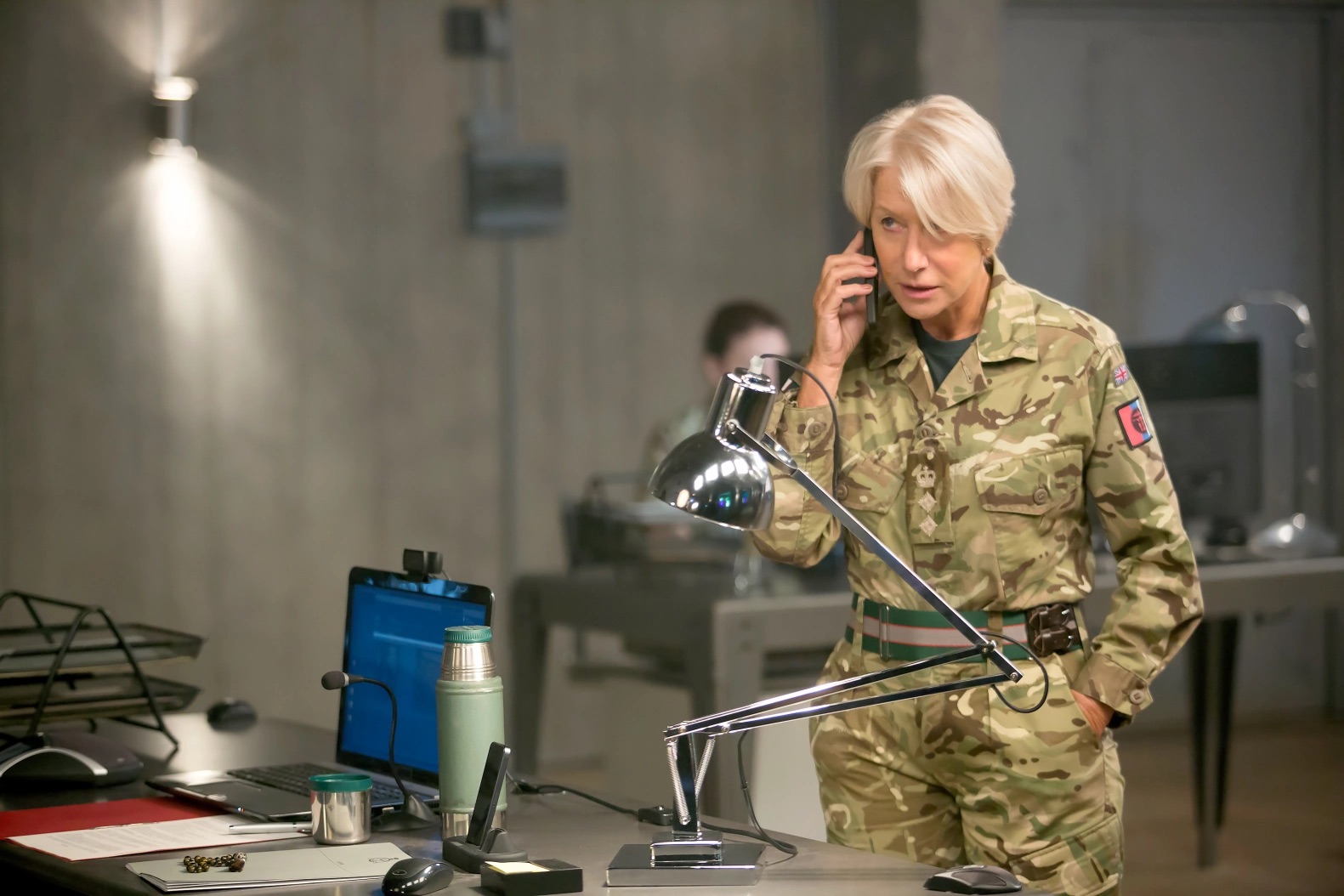
We were given the movie ‘Eye in the Sky’ as a case study to analyse in the Analysis for Business Problem (ABP) course. The movie portrays the ethical question of whether to carry out a drone strike to eliminate a group of terrorists in Kenya, despite the potential collateral damage to innocent civilians in the immediate vicinity. It examines the decision-making process of military and political leaders, as they grapple with the moral implications of using high-tech surveillance and weapon systems, and the human cost of modern warfare. The characters in the movie were presented to weigh the value of taking out dangerous individuals against the risk of harming innocent people, and the psychological and political consequences of their actions. Ultimately, the film highlights the complex and controversial nature of drone warfare and the difficult choices faced by those who are responsible for making life-and-death decisions in the modern battlefield.
I would like to analyse the key character of the movie Colonel Katherine Powell, a senior officer in the British military is responsible for overseeing a drone mission to eliminate a group of terrorists in Nairobi, Kenya. At the beginning of the film, she was shown as a seasoned military officer, who was fully committed to her mission. She was focused and determined to eliminate the terrorists and was willing to take any necessary measures to achieve her goal.
Colonel Katherine Powell initially states that the mission is intended to capture the terrorist suspects alive, rather than to kill them. However, as the situation on the ground evolves and the drone observes the terrorists’ preparations to carry out a suicide bombing, Colonel Powell’s perspective changes and she becomes increasingly concerned about the potential loss of life, if the attack is not stopped. When a young girl sets up a table, to sell bread near the building where the terrorists are located, Colonel Powell realises that the risk to civilian life is too high, and that she cannot risk allowing the terrorists to carry out their attack.
At this point, Colonel Powell shifts her focus to eliminating the terrorists, rather than capturing them alive. She believes that the risks of a suicide bombing were too great, and that a drone strike was the only viable option to prevent it. The decision to shift from a capture to a kill mission highlights the difficult ethical and moral dilemmas that military and political leaders face in the context of modern warfare, particularly in situations where the risk to civilian life is high.
She was confronted with the reality of potential collateral damage, as the mission progresses. She was shown to be conflicted and struggling with the moral implications of her actions. She sought advice from her superiors and legal advisors, highlighting the complexity of the decision-making process. When the risk of civilian casualties becomes more imminent, Colonel Powell became more emotionally invested in the situation, as she realises the gravity of her decisions. This was particularly evident when she confronts the politicians who have the final say, in whether to launch the drone strike, pleading with them to authorise the attack and take responsibility for the potential consequences.
Overall, Colonel Powell’s role highlights the difficult choices and moral dilemmas that military leaders face in modern warfare, particularly in the context of drone operations where the line between combatants and civilians is blurred, and the consequences of decisions are not always immediately apparent.
The Character Colonel Powell highlights the complex and rapidly changing nature of intelligence gathering and decision-making in modern conflict zones. #EMBA28




 AGEING; GLOBAL TRENDS AND ITS CHALLENGES