
Synopsis
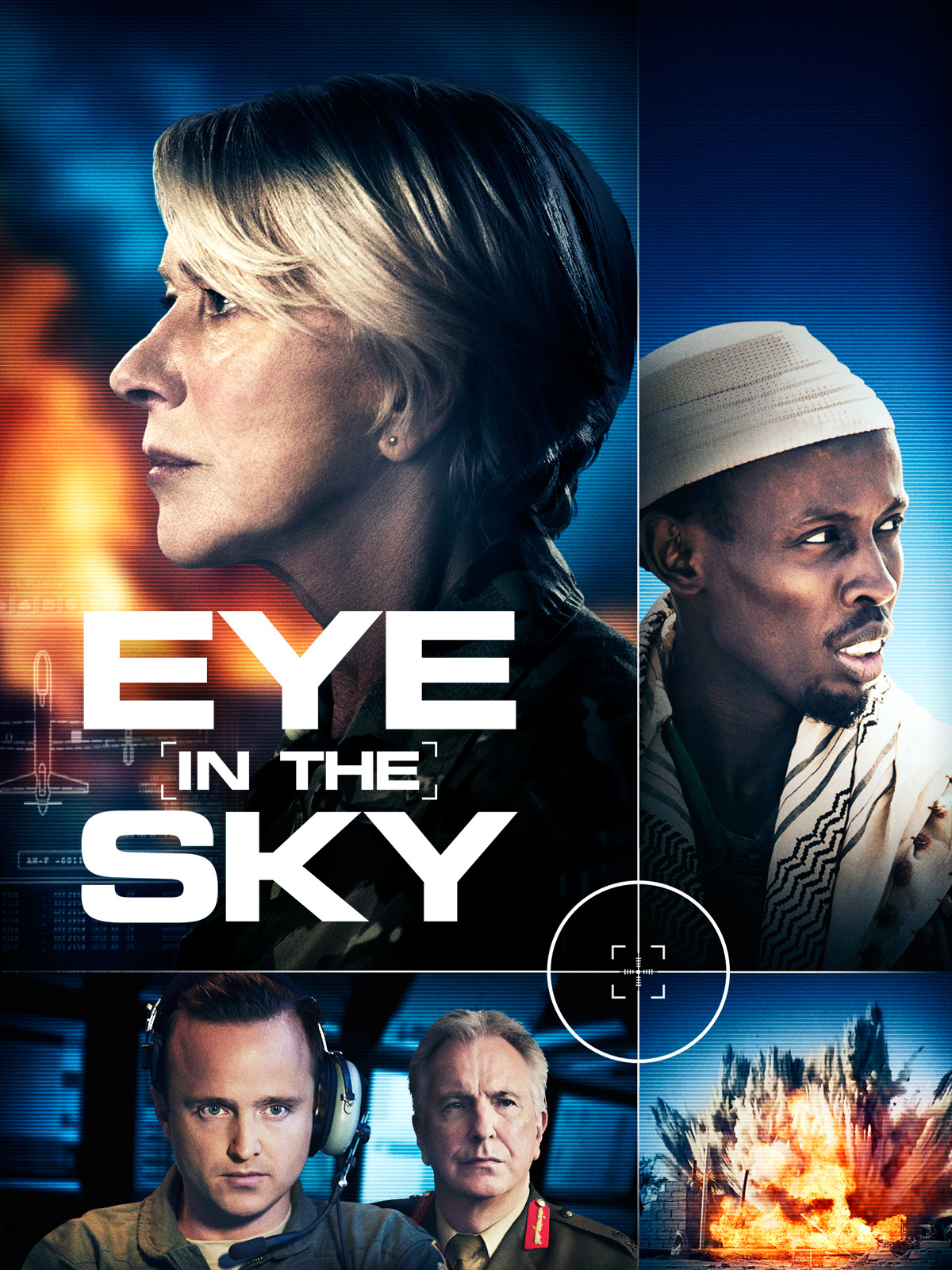
The goal of the movie was to capture three Al-Shabab targets who were hiding out at a safe house in Nairobi, Kenya, and who were on the US’s top ten most-wanted list. The initial goal of the mission was to capture the target, not to kill them. When it was discovered that the target had two suicide bombers plotting an attack, Colonel Powell had to ask for permission from the COBRA meeting members to proceed with changing the mission’s original goal from capture to kill while minimizing collateral damage.
In order to complete the objective, a drone piloted by an American named Steve Watts (Aaron Paul) would be used to launch a missile attack on the terrorists’ safe house. As a young girl reaches the kill zone, however, things become tricky and the military personnel must decide whether to continue with the mission or call it off.
When Farah, the field agent attempts to pay for all of Alia’s bread in the hopes that she will leave, his cover is broken and he is forced to run away without obtaining it. Powell instructs her risk-assessment officer to identify parameters that will enable him to cite a lower 45% likelihood of civilian casualties in order to obtain authorization to carry out the strike. He evaluates the strike point and places a 45–65% likelihood on Alia’s demise. She insists that he only validate the lesser figure before passing this information up the line of command. When the strike is approved, Watts launches a missile. One of the terrorists survives the explosion, which ruins the building and hurts Alia. A second missile is ordered to be fired by Watts, and it hits the target just as Alia’s parents arrive. Alia is taken to a hospital in a hurry, where doctors pronounce her dead.
The movie focuses on the challenging moral and ethical judgments that military personnel and government leaders must make because they risk the lives of innocent people, including the young girl. The situation becomes more urgent as time passes, and the officials are forced to consider the benefits and drawbacks of their options.
Learnings
Defined Responsibilities:
Each team member has a distinct task and duty to fulfill while working toward the same goal of apprehending the most sought terrorists. Roles that are clearly defined and understood make it easier to achieve goals and reduce confusion. These roles and responsibilities range from the Nevada-based surveillance team, which was tasked with keeping an eye on and locating the targets, to the Kenyan special forces, who were required to make an arrest, the undercover Kenyan field agents, who monitored ground surveillance, the facial intelligence officers, who identified and verified the targets, and COBRA, which was in charge of overall coordination and had the Lieutenant General, the female government minister, the Attorney General, and the Minister of State present.
Effective communication:
In ensuring that everyone on the team is aware of the mission’s overarching goal, clear and defined communication is crucial to the team’s success. This is clear from Colonel Powell’s orders, which explain the consequences of each choice made and are provided to each team member dispersed throughout the mission. The team members felt confident in their choices to halt or move forward with any stage of the mission.
Diversity of perspectives:
In the film, decision-makers are made up of officials from several departments and agencies, each of whom brings a special viewpoint to the situation. This diversity makes it more likely that all relevant factors will be taken into account and that choices will be based on the most accurate information.
Trust and respect:
Every team dynamic needs trust and respect because they enable team members to work efficiently and make decisions based on the trust of their superiors. Because of this trust, disagreements are kept to a minimum and everyone on the team is focused on the same goal.




 There is no such thing as overkill