

Analysis of business problems is a course that I find fascinating because of its relevance to real-life situations. We treated various cases from different fields of endeavour. The rationale is that as a business manager, you don’t have to be a technical expert before solving business problems. You must read the case multiple times to get the best out of the course and read it keenly with eyes for details because the key themes you need for your analyses are nuanced. I enjoyed the classes, but the duration was always short and didn’t cater for enough robust discussion.
The future of Bio-Pasteur was the first confirmed case we attempted in class. I had the opportunity to discuss the subject with my group, and we had a robust discussion that fine-tuned my submission.
It was the story of the BioPasteur company founded by Thompson, Jeff and Professor Waitz in 2002. The organisation became popular due to their technological innovation that allowed microorganisms to multiply rapidly in a controlled environment. It was faster and cheaper than the alternative in the market. After several efforts to break into the market, they became successful with their Lobloprin product for treating high blood pressure. They made a $ 50 million profit within a year and a potential increase of 10% every year till 2019. With the profit, they expanded their R $ D and developed a drug called Diastop to cure type 1 and type 2 diabetes. They had a trial with 1,000 people, 4.5% had heart-related complications, and 0.3% had severe complications. Though the regulatory body had approved the drug, they were considering whether take it for further R $ D because of the people that had complications or launch it now based on the approval and confidence in their brand.
I remember us debating in our group what the essential criteria and the decision should be. The most natural thing to do is to take a position before analysing the case and try to force-feed criteria into your earlier decision- which is wrong. If you follow the decision-making framework, it is almost impossible to miss it. Getting the objective of the case is where most people missed it, but I was lucky enough to grasp that the goal is not “to decide the best alternative or outcome” but what next after the decision? What does success look like after we must have solved the problem? If you miss out on your objective, you may likely miss out on your criteria- and that has happened to me a couple of times. Finding the right objective seems to be an essential part of the course. Criteria are the conditions your alternatives must meet to attain your objective. Furthermore, the faculty was more concerned about the process than just the result, and I also remember that she said that if your approach is correct, you will most likely arrive at the same destination.
This is an eye-opener for me, and I want to continue sharpening my analytical and critical thinking skills. This can translate to better decision-making for me in my place of work and make me a better manager.




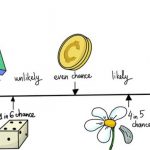 The Concept of Probability