
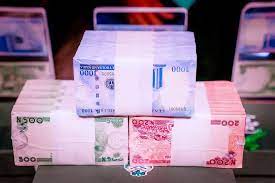
On 16 October 2022, the Central Bank of Nigeria (CBN) Governor, Mr. Godwin Emefiele, announced the apex bank decision to introduce redesigned N200, N500 and N1,000 notes into circulation from 15 December 2022[1]. The expected new note will be legal tenders together with old notes until 31 January 2023 when the old N200, N500 and N1000 bank notes will cease to be legal tender in Nigeria economy. The last time when such magnitude of naira change-out happened was in 1984 when the current President of Federal Republic of Nigeria, Muhammad Buhari was military Head of State.
The CBN Governor during the announcement has listed the need to ‘control of the naira in circulation, manage inflation, combat counterfeiting, and ransom payment[2]’ as some of the reasons behind the decision to redesign the three highest denomination of Nigerian currency notes.
Furthermore, the CBN Governor was quoted as saying “evidently, currency in circulation has more than doubled since 2015; rising from N1.46 trillion in December 2015 to N3.23 trillion in September 2022. This is a worrisome trend that cannot be allowed to continue… In recent years, the CBN has recorded significantly higher rates of counterfeiting especially at the higher denominations of N500 and N1,000 banknotes… Although the global best practice is for central banks to redesign, produce and circulate new local legal tender every five to eight years, the naira has not been redesigned in the last 20 years.
“On the basis of these trends, problems, and facts, and in line with provisions of sections 2 (b), section 18 (a), and sections 19, subsections (a) and (b) of the CBN Act 2007, the management of the CBN sought and obtained the approval of President Muhammadu Buhari to redesign, produce, and circulate new series of banknotes at N200, N500, and N1,000 levels. In line with this approval, we have finalised arrangements for the new currency to begin circulation from December 15, 2022. The new and existing currencies shall remain legal tender and circulate together.”[3]
As lofty as reasons behind the Naira Redesign project, the events of last 6-months have nothing but prove that best intention does not translate to best service delivery unless the intention is supported with effective, efficient and executable plan with every stakeholders and shareholders active participation, constant execution progress report, regular review to determine if the target objective will be achieved or not.
Starting from failure of apex bank CBN to make the redesign naira notes available for banks and financial institutions for issuance to populace from 15 December 2022 as stated in Mr. Emefiele press statement on 23 November 2022 when the redesign notes were presented to Mr. President for symbolic launch at Aso Rock, Abuja to numerous flip-flap statements from CBN demonstrating lack of proper execution plan with risks identification and mitigations in place to ensure effective plan execution so that stated objectives of the policy can be achieved without creating unintended, unbearable and harsh consequences for public users.
Till today, havoc caused by the ineffective implementation of the Naira redesign project by CBN is still visible in every corner of the country even though Mr. Emefiele and his team are trying hard to ameliorate the sufferings caused by the bad execution of good policy[4].
[1] TIMELINE: Naira redesign policy from inception to Supreme Court judgement (premiumtimesng.com)
[2] ibid
[3] Nigeria’s currency redesign — A case study approach | TheCable
[4] Naira Redesign, Policy Design and Execution Flaws – THISDAYLIVE




 GAINING UNDERSTANDING OF FINANCIAL STATEMENTS USING FINANCIAL RATIOS