
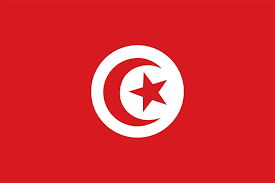
ENOVE is a Tunisian company that experienced the consequences of the Arab Spring, which started in 2010. After the fall of President Ben Ali, the country experienced a governmental vacuum that made it hard to conduct business. Peter Bismuth, the president of ENOVE, had to decide whether to plan a growth strategy for his family-owned company and relocate his business to a more progressive country or to be a patriotic Tunisian and continue his business in Tunisia. But, Bismuth wanted to be a part of his country’s resurgence and guarantee the continued growth of his family’s company.
Tunisia has a rich historical background, including colonization by numerous European powers, including France, which remained under their control until 1956. After gaining sovereignty, Habib Bourguiba led Tunisia from 1957 to 1987. Principles of secularism and inclusion drove Habib. He aggressively fought against cojoining politics with religion. His regime and policies remained steadfast until his abdication. In 1987, former military general Zine al-Abidine Ben Ali obtained power. And he continued his predecessor’s stand against Islamic rule.
During his tenure, corruption became plain, particularly during the elections of 2004 and 2009. Public disapproval began to intensify. This led to protests and demonstrations throughout the country in December 2010. This revolution resulted in Ben Ali’s ouster. And its success also sent shockwaves throughout the Arab world. Galvanizing people across the region as the Arab Spring quickly spread to close countries and beyond.
By August 2014, Tunisia had begun to rebound from the aftermath of the revolution and the subsequent setbacks. The country’s National Constituent Assembly approved adopting a new modern constitution. This aimed to protect the rights and interests of its citizens. Also emphasizing a framework of governance based on pluralistic ideals. An interim government was put in place to maintain the integrity of the new legislation. This was the case until democratic elections took place to elect a new leader.
Political reforms since the protests allowed many Tunisians to be optimistic about the economic progress of their country. Bismuth and many other CEOs at other businesses hoped that these changes would generate new foreign interest in the region. And would lead to increased economic development, entrepreneurship, and investment in the Tunisian industry. However, foreign business leaders remained sceptical about the country’s future. And many believed a conservative victory would hinder the ability to conduct business within the country.
Despite the uncertainty in the current political environment, ENOVE continued to operate in Tunisia and expand its business. The company implemented a strategy that focused on diversifying its customer base and products while reducing its dependency on exports to the European Union. ENOVE also invested in research and development to improve its products’ quality and reduce production costs. Additionally, the company implemented a lean management system to optimize its operations and reduce waste.
ENOVE’s growth contributed to Tunisia’s economic development, creating job opportunities and increasing exports. The company’s success attracted foreign investors, who saw the potential of doing business in Tunisia. ENOVE became a role model for other Tunisian companies that wanted to expand their business despite the unstable political and economic environment. In conclusion, ENOVE’s growth in Tunisia contributed to the country’s economic development despite the challenges posed by the Arab Spring. The company’s success attracted foreign investors, who saw the potential of doing business in Tunisia. ENOVE’s strategy of diversifying its customer base and products, investing in research and development, and implementing a lean management system enabled the company to continue expanding its business in Tunisia. ENOVE became a role model for other Tunisian companies that wanted to contribute to their country’s resurgence.




 Intentional Inclusion