
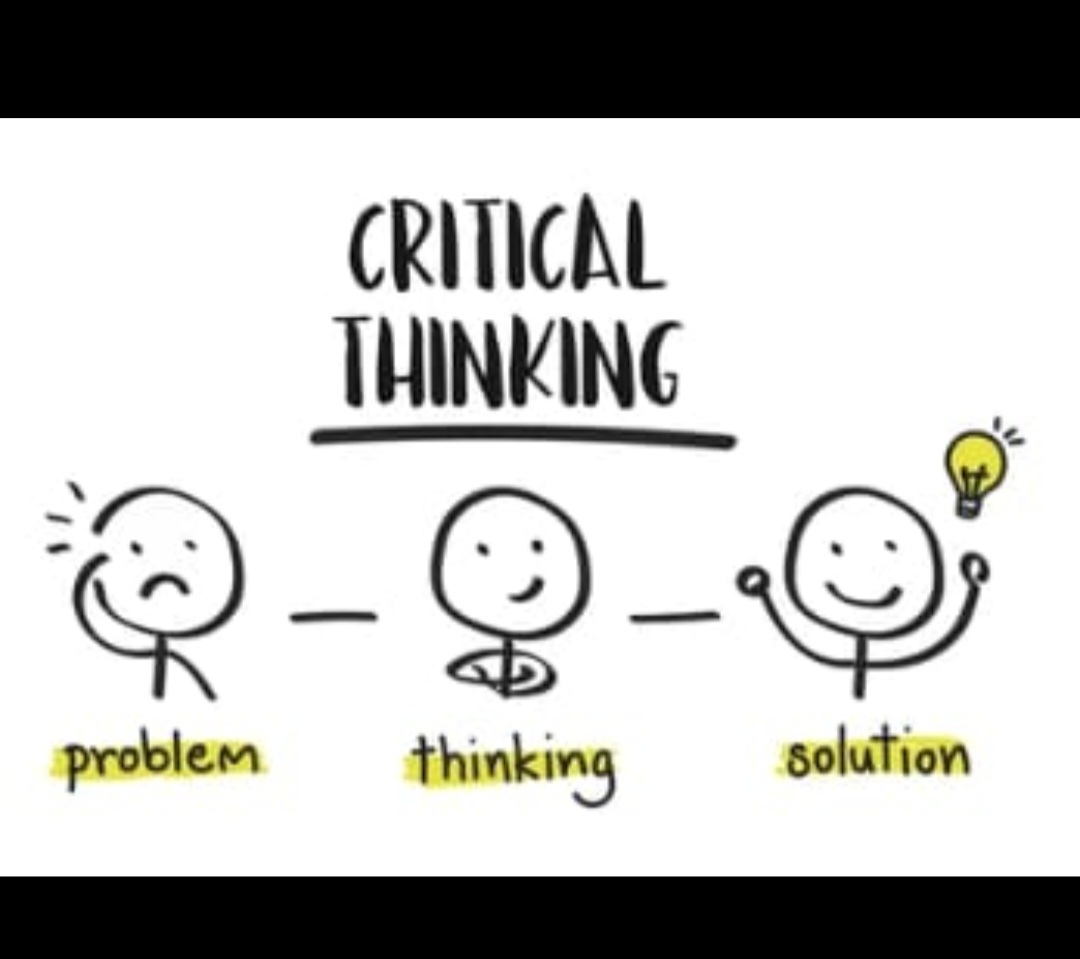
It is easy to make decisions, I thought. This is because the conscious part of my mind has overtime worked to think that nothing critical ever goes into decision-making. I mean, once a problem arises, just make a decision using what you see.
In the same way, the average Nigerian has been taught to immediately think about creating solutions as soon as problems arise, not considering the intricacies of all the problem entails. That average Nigerian was me a month ago, and of course, growing up in the northern part of Nigeria, I saw how the Hausa man never worried about what tomorrow holds, it was always ‘fix today and whatever issues today had’ every other thing could wait.
That pattern of thinking composited me and how I made my decisions. And while at that, the first semester courses at Lagos Business School were introduced, and upon seeing them, I thought ‘Analysis of Business Problems? Must be an easy one. However, classes began and two weeks into the program I realized that proper decision-making hinges on several factors. The why, the when, the how, the what, the where, etc.
At this point, it became thought-provoking to know that every effective decision that has been made had a process of critical thinking that went into it. I still found it interesting to know that I had to think about my thinking to bring out the most refined thoughts which are critical to my decision-making process.
The concept of decision-making entails so much more than meets the eye. While in some cases, cost implications are considered, in some other cases, risk averseness is considered, overall, we tend to process information based on our experiences (in other words, automatic processing) and/or based on facts, reasoning, and thinking (in other words, cognitive processing).
To list a few of the processes, they include: asking questions, sticking to the point, stating the clear objectives that probe better solutions, constructively criticizing each possible option and lastly, weighing all options in order of priority. Glossing over this list gives an idea of the processes but they typically are not as easy to call as they look. Hence the need to practice, rehearse and sharpen one’s thinking.
One of the most striking statements made on the course that has stayed with me is, ‘if you are looking to operate on a local scale, then continue to make decisions the way you have been taught. If you are, however, looking to operate on a global scale, then embrace the processes that go into decision-making as well as critical thinking and start to apply them. It struck me and now, I ask, why now not embrace the process for better decision-making?
Moreso, an expert in anything was once a beginner or learner, right? It is now a conscious work requiring my efforts to learn how best to make effective decisions going forward. The shift to accept the processes of decision-making has begun in me and I cannot wait to see how much progress it yields in my career.
#MMBA4




 L’art de la pensée critique dans l’analyse des problèmes d’affaires