
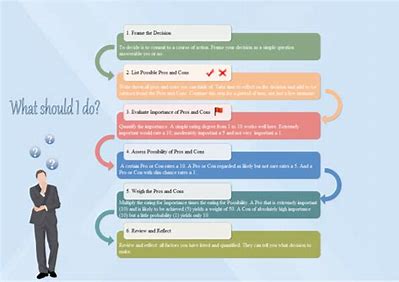
Everyone makes decision and it is a fact. However, decision-making process differs from one individual to another, although there are models or guidelines advised by experts to be considered in making decision in situation especially for corporate organizations.
As we know, ‘decision making process is a method of gathering information, assessing alternatives, and making a final choice with the goal of making the best decision possible’[1]. From identifying the need for decision to be made – what problem is at hand to be resolved, what will be outcome of solving the problem and how will you determine that the problem has been solved then you will need to gather information and data on the identified problem and possible solutions (alternatives) available to solve the problem while setting up criteria to weigh alternatives identified looking at both cons and pros of each potential solution which eventually leads to decision making with choice of a solution among the available options knowing full well that there are consequences and trade-offs for both chosen solution and alternatives forgo[2].
No solution solves a problem to achieve target objective without an action plan which is embedded with review stage – where performance of the chosen solution whether it has solved the problem or not, etc.
Decision-making process can be via single person input and decision – Direct or Autocratic style where decision owner may not follow many steps or review many options before deciding. It is mostly useful in time emergency or urgency. Another style of decision making is Team or Collaborative style. As the name implies, the style requires all members input before decision is taking. It is time-consuming and most fit situation where there is no urgency. Finally, there is Consultative style of decision making where decision owner consult other people with expertise or competence on the problem to be solved for advice. Consultative decision-making style is more interactive and enrich eventual decision even though it can be time-consuming. It is highly recommended for problem that needs technical solution[3].
Consultative style also provides new perspectives on problem and alternatives; creates opportunities for stakeholders to have their inputs in the decision and thereby easy the task of execution because people tend to own the decision, they were part of the making process.
In a complex organization or business environment, there are problems that required expertise solution and consultative style of decision-making avails the decision owner the opportunity to seek and receive inputs from expertise on the subject problem thereby actually taking decision based on competence and expertise rather than emotion.
This style provides business leaders opportunity to identify future potential leaders for mentoring and coaching thereby creating leaders’ pool where the organization can continue to fill leadership position as at when required.
It is worth to note that as good as Consultative style is in decision-making, there is need to mitigate the risks it carries.
Time requirement, need to manage people selection for the process otherwise there may be risk of too many people or right people not involved in the process, impact of decision on people especially people that the decision is against their inputs, and they need to execute the eventual decision. Despite the stated negatives in Consultative decision-making style, it is recommended with appropriate mitigations to eliminate or reduce impact of those negatives to barest level[4].
Yes, you own the decision but inputs from other people enrich the decision towards achieving the objective of the decision making – Solve the Problem!
[1] 7 Important Steps of the Decision Making Process [2023] • Asana
[2] ibid
[3] Consultative Decision Making: What Is Consultative Style + Pros/Cons (teamly.com)
[4] ibid




 The art and science of predicting