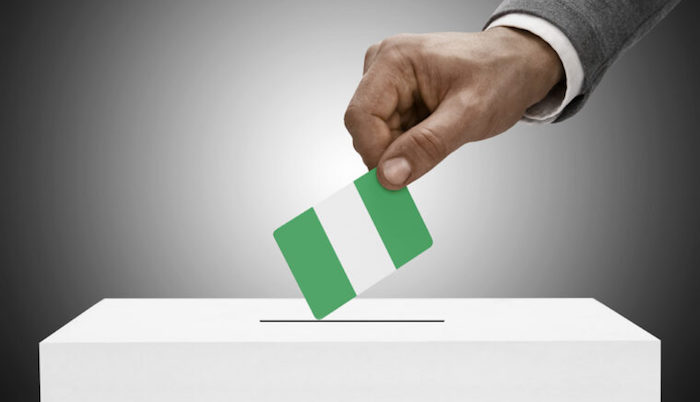

Today, we went out for another round of elections. This time, it was the governorship elections. There was a looming sense of apathy and disenfranchisement among my peers, as many felt that their votes during the presidential election counted for nothing. There was threats of violence and voter intimidation around. Why come out to vote? Why would this be any different than the outcome of the presidential elections? I could not help but think like a data analyst, a consequence of studying about probability during my MBA classes. Probability is the branch of mathematics concerned with measuring the likelihood or chance of an event occurring. It is a fundamental concept in many fields, including statistics, economics, finance, engineering, and the natural sciences.
At its core, probability is about quantifying uncertainty. When we talk about the probability of an event, we are essentially asking how likely it is to happen. Probability is typically expressed as a number between 0 and 1, with 0 representing an event that is impossible and 1 representing an event that is certain.
The most basic kind of probability is called “classical” or “theoretical” probability. This type of probability assumes that all possible outcomes of an event are equally likely, and calculates the probability of a particular outcome by dividing the number of ways that outcome can occur by the total number of possible outcomes. For example, if we flip a fair coin, there are two possible outcomes (heads or tails), and each outcome is equally likely. Therefore, the probability of flipping heads is 1/2 or 0.5.
Another type of probability is called “empirical” or “experimental” probability. This type of probability is based on actual observations or data, rather than theoretical assumptions. For example, if we flip a coin 100 times and get 60 heads and 40 tails, the empirical probability of flipping heads is 0.6 or 60%.
In addition to these basic types of probability, there are many other more complex types, such as conditional probability, which takes into account additional information about an event, and Bayesian probability, which involves updating probabilities as new information becomes available.
Probability has many real-world applications. For example, in statistics, probability is used to make predictions about the likelihood of certain events occurring, such as the probability of a particular stock price rising or falling. In finance, probability is used to price options and other financial instruments. In engineering, probability is used to analyze the reliability of systems and predict the likelihood of failure. In the natural sciences, probability is used to model and analyze complex systems, such as weather patterns or the spread of diseases.
Tempted as I was to begin analyzing the available data, I realized that this was not the time. People were angry, scared and hopeful all at once. Perhaps, if they understood the basic principles of probability and its various types, they could have made more informed decisions and better predict the likelihood of violence and voter intimidation at the polls. Whether we are analyzing financial markets, designing engineering systems, studying the natural world or the present elections, probability is an essential tool for understanding and predicting the uncertain world around us.




 Information Overload. How to mitigate its effects as a working-class student.