
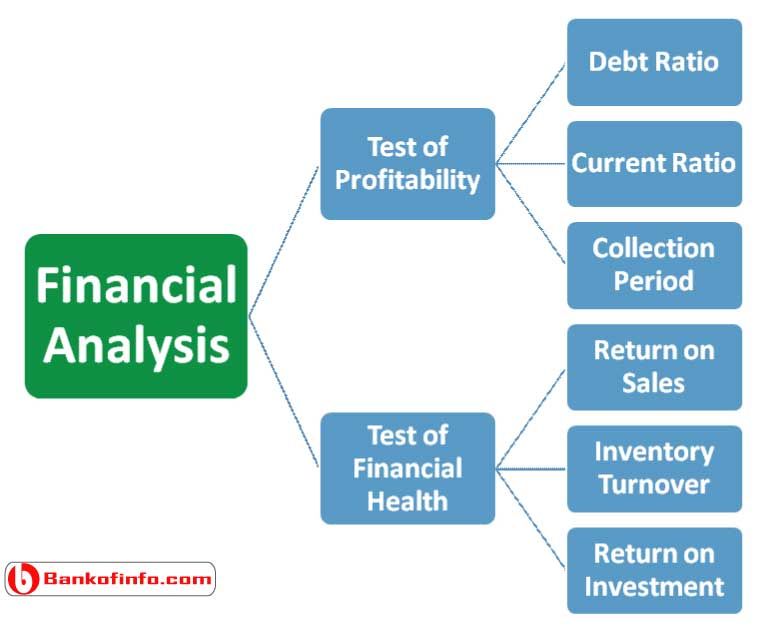
In my previous post, I talked about how the financial statements of a business organization can be analyzed using accounting ratios such as profitability, liquidity, solvency, and activity ratio. I also explained some profitability ratios use in analyzing income statements or statements of profit or loss.
Some balance sheet items can be analyzed using the liquidity ratio.
Liquidity ratios: measure a company’s ability to meet its short-term obligations. According to Adam Hayes, (Understanding Liquidity Ratios: Types and Their Importance; Oct. 6, 2022); “Liquidity ratios are an important class of metrics used to determine a debtor’s ability to pay off current debt obligations without raising external capital”. Below are some of the formulas that can be used in ascertaining liquidity ratios:
- Current ratio = Current assets / Current liabilities
- Quick /Acid test ratio = (Current assets – Inventories) / Current liabilities
Note: Quick ratio measures the ability of a business to meet its short-term obligation with its most liquid assets. Hence, the reason for excluding inventories.
Solvency ratio: also known as the leverage ratio. Unlike quick ratio, solvency measures the ability of a business to meet off with its long-term debts. Long-term debts may include deposits, debentures, or loans. The ratio is calculated thus:
- Debt to Equity ratio = Total liabilities / Total equity
these values are obtained from the company’s statement of financial position. The ratio measure or evaluate a company’s financial leverage. That is if the shareholder’s equity has the ability to cover all debts.
- Debt ratio = Long-term debts / Net Assets
Or
Debt ratio = Long-term debts / Capital
It is calculated by taking the total liabilities and dividing it by the total capital. However, it is important to know that the higher the ratio the riskier the business.
If I can recall, other metrics used in calculating Solvency/Leverage ratio include:
- Equity ratio and
- Interest coverage (EBIT / Interest on long-term loan)
Activity ratio: “An activity ratio is a type of financial metric that indicates how efficiently a company is leveraging the assets on its balance sheet, to generate revenues and cash” Will Kenton; Investopedia, October 18, 2020.
In many textbooks, the Activity ratio is referred to as the Efficiency ratio. It can be calculated as follows:
- Total assets turnover = Revenue / Total assets
This ratio measures how efficiently a company utilizes its assets to generate revenue.
- Returns on Equity (ROE) = Net Income / Equity
Many people use to come across ROE, which measures the revenue raised from shareholder equity.
At this stage, I believe we have touched different angles of the analyses of financial statements. Although, we have assessed and analyzed the financial statements of a sole proprietor business in the previous session of CFA (EMBA 28, LBS). a case study of JPREP, most of the metrics we discussed in this blog are applicable to that case. However, there are other important metrics like Cash Conversion Cycle (CCC), etc. that we did not discuss yet that we may likely come across them.




 What Does a Strong Balance Sheet Look Like?