
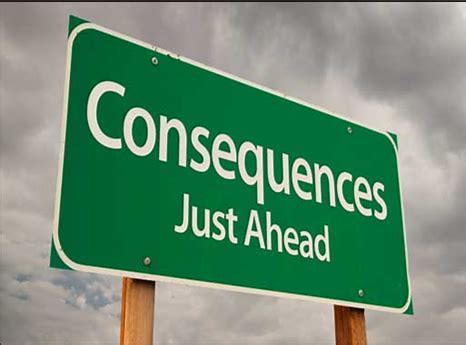
When we analyse cases and recommend an action or decision, they typically have no consequences. But in real life, “the choices we make have lasting consequences”, as succinctly put by the American children’s writer, Joan Baehler Bauer.
Silicon Valley Bank, a commercial bank headquartered in Santa Clara, California, United States of America just failed. Silicon Valley Bank was the sixteenth largest bank in the United States of America, with over US$170 billion in deposits and over US$200 billion in assets. The bank, which has been operating since 1983, is said to be banker to almost fifty percent of US based venture capital backed start-ups in the healthcare and technology space that went public in 2022. Reports suggest that the bank’s failure is the largest bank since 2008 and the second largest bank to fail in the country ever.
Financial analysts have indicated that Silicon Valley Bank failed because of four reasons:
- The bank mobilized significant sums of deposits during the 2020 / 2021 covid pandemic era, tripling its deposit base in that period
- The bank sort feasible investment options to deploy the additional liquidity and saw mortgage backed securities (MBS) at around 1.5% yields as viable, with significant sums invested (estimated at US$80 billion)
- As inflation rose post-pandemic, the Federal Reserve Bank of the United States of America raised rates aggressively in 2022. This resulted in the value of the MBS eroding significantly
- Simultaneously, depositors were withdrawing more cash than they were depositing. Hence a capital problem was being compounded by liquidity issues
When the liquidity challenges became public knowledge as Silicon Valley Bank attempted to raise additional capital, there was a run on the bank.
As I read about this event while it was unfolding over Thursday and Friday, I could not help but think about the case analysis. I keep wondering how I could use my knowledge of financial analysis from Corporate Financial Accounting to understand the balance sheet and the health of the business before it became common knowledge.
I wondered how a broader analysis of the bank’s circumstances leading to its ultimate demise could be analyzed using the PrOACT and eight steps analytical models to make decisions that could have led to better outcomes for the bank. I wondered what the relevant facts were, how they developed, what was known and when and who had these information.
I also considered that perhaps how I could use my knowledge in linear programming and regression from Data Analytics in the portfolio decision, forecasting of the potential interest rate environment and analysing the risk portfolio risk under various possible scenarios.
Of course, I do not doubt that the executives at Silicon Valley Bank sought to make the correct decision at the time. Given that they are the only bank currently impacted, it suggests that other banks either made better decisions, were better able to course correct or had better fundamentals to withstand similar shock experienced by Silicon Valley Bank. But the eventual outcome indicates that key decisions or a number of them, were not right.
And so I wonder to myself if I would have been able to make the right or at least, less wrong decisions, with the same facts that executives of Silicon Valley Bank had, at the time they had it, and with similar objectives. Could I have avoided the recency bias of thinking that the low-rate environment of 2020 / 2021 would continue into the future in the medium to long term?




 Caliber of Facilitators at the lagos Business school