
Hi Readers, hope you have been balancing your balance sheet.
Welcome back everyone to another update on Corporate Financial Accounting (CFA) gist page based on my class experiences. If you missed the Part I, kindly check the archive section on this page, thank you.
The last four sessions of CFA class have provided further insight into how Accountants and Financial Experts work on daily basis. When you read on pages of newspapers or access online the financial statements of corporate bodies, you may start to ask how are these transactions derived, what qualify each entry as a transaction to be entered, what kind of activity resulted in a transaction that is entered into financial statement, what is implication of interpretation of financial statement to ordinary person reading on pages of newspaper or a shareholder in the organization that is not an accountant or financial expert and in fact, what qualify someone to be a shareholder to start with? Many questions of this nature are needed to be answered effectively for ordinary mind to comprehend and interpret financial statements of corporate organization without hassle.
Starting with who owns the business or who is a concern party in any business entity whether Sole Proprietorship or Public Liability Company or Limited Company.
Everyone that has a stake in a company, owns a part of the company. From the person that initiated the idea that gave birth to the company (Promoter) to the person that provided translate the idea to reality (Funder) to the person that contributed capital to establish the company (Core Investor) and the person that came onboard to further support the company’s growth with capital (Major Investor) to the person that bought onto the company when the company was opened to public via offer or share (Shareholder) as well as the person that make the company services and goods available to end users on retailing basis (Shareholder). All these group of people have stake in the company and contributed at various stages of company life to create transactions for the company which will eventually become financial statement for the public.
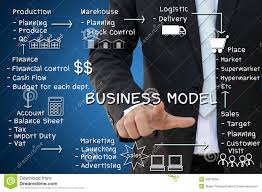
Each company starts with a business concept or model which ‘is the conceptual structure supporting the viability of a business, including its purpose, its goals and its ongoing plans for achieving them’[1]. The business model will provide answers to fundamental questions like who is target customer, what value does the business wants to offer the target customer and at what cost to the business and price to customer, etc. Typically, a business model will have a comprehensive plan or feasibility report.
Approved business model will give insight into strategy required to deliver the model – Business Strategy. Decisions will be next step in transforming the strategy into operations. Business decisions are taking with overall objective of achieving the vision and mission of the business as clearly stated in the Business Model.
Every decision involves execution otherwise it is not an effective decision. At the commencement of business decision execution, we have started to generate business event or transaction. Applying for contract to execute project that fit into the business strategy to achieve business model objective is an example of business event or transaction.
Can you think of more examples of business event or transaction?
Stay glue to the page as we continue next time with other steps towards unravel the financial statements and progress our journey to be fully ‘CFAite.’
Remember, remain balanced like balance sheet!



