
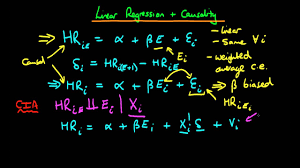
Linear regression is a statistical technique used to model the relationship between a dependent variable and one or more independent variables. In the context of HR, it can be used to analyze the relationships between different variables related to human resources, such as employee performance, turnover, job satisfaction, and compensation. In order to apply linear regression across different value chains in HR, there are a few steps that need to be taken.
Step 1: Define the problem
Before applying linear regression, it is important to define the problem that you want to solve. For example, you may want to predict employee turnover based on certain factors such as compensation, job satisfaction, and length of employment. Alternatively, you may want to understand the relationship between employee performance and training programs. Defining the problem will help you to determine which variables to include in your analysis.
Step 2: Gather and clean data
Once you have defined the problem, you will need to gather and clean data. This may involve collecting data from different sources such as employee surveys, performance evaluations, and compensation records. It is important to ensure that the data is accurate and complete, and that any outliers or missing values are dealt with appropriately.
Step 3: Choose independent variables
In linear regression, the independent variables are the factors that are thought to influence the dependent variable. In the context of HR, independent variables may include things like compensation, job satisfaction, training programs, and length of employment. It is important to choose independent variables that are relevant to the problem you are trying to solve.
Step 4: Choose a dependent variable
The dependent variable is the variable that you want to predict or explain using the independent variables. In the context of HR, dependent variables may include things like employee turnover, performance, or job satisfaction.
Step 5: Run the regression analysis
Once you have gathered and cleaned the data and chosen the independent and dependent variables, you can run the regression analysis. This involves using a statistical software package to calculate the regression coefficients, which represent the strength and direction of the relationship between the independent and dependent variables.
Step 6: Interpret the results
After running the regression analysis, it is important to interpret the results. This may involve looking at the coefficients and determining which independent variables have the strongest relationship with the dependent variable. It may also involve examining the significance of the coefficients and determining whether the results are statistically significant.
Step 7: Apply the results
Finally, it is important to apply the results of the regression analysis to the problem you are trying to solve. For example, if you have identified that compensation is a strong predictor of employee turnover, you may want to consider increasing employee salaries or offering other incentives to reduce turnover rates.
In summary, applying linear regression across different value chains in HR involves defining the problem, gathering and cleaning data, choosing independent and dependent variables, running the regression analysis, interpreting the results, and applying the results to the problem at hand. By following these steps, HR professionals can gain valuable insights into the factors that influence employee behavior and use this information to make more informed decisions.




 90 Seconds Pitch to Potential Investors