
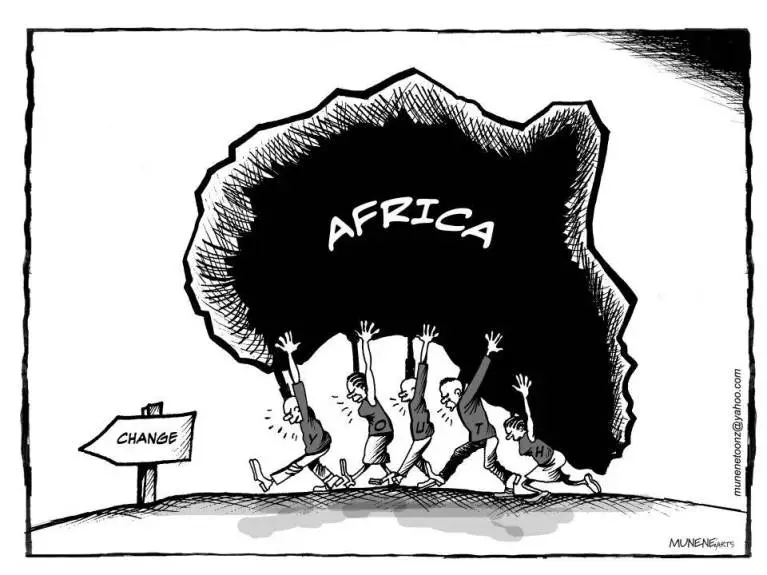
…Considering the numerous challenges that confronted the actualization of the goals and objectives of NEPAD, especially in the area of development of African states, it has become imperative for the continent to devise a means of overcoming these challenges and forge to the path of development like her counterparts in other parts of the world. The need to have an unbundled strategy toward development among African states seems to be a way out. Unlike other initiatives that attempted to solve all the problems in the continent, a new initiative that would focus in addressing a particular segment of Africa’s developmental challenges would be more effective.
Trade, over the centuries, and across all continents have been effective in the attainment of development. Among all the indices of development, achieving free and fair trade among countries has proven to have immense benefits, and the ability to catapult countries to development. It is against the backdrop that promoting trade among African states has been identified as the focus and would create a veritable tool for the much development the continent crave.
African Continental Free Trade Area (ACFTA)
The momentum towards African states free trade has been intensifying. In March 2018, over 40 countries signed the African Continental Free Trade Area agreement. Once fully implemented, the AFCFTA is expected to cover all 55 African countries, with a combined GDP of about US$2.2 trillion. In addition to increased trade flows both in existing and new products, the AFCFTA has the potential to generate substantial economic benefits for African states. These include;
- Single large market
- Achieving sustainable and inclusive socio-economic development
- Higher income due to increased efficiency and productivity from improved resource allocation
- Increase cross-border trade and investment flows
- Increase in technology transfers
- Low import tariffs among member states etc.
Furthermore, in order to actualize these benefits, African states will need reduce other trade barriers by making more efficient their customs procedures, reducing their wide infrastructure gaps, and improving their business climates. Also, policy measures should be taken to mitigate the differential impact of trade liberalization on certain groups as resources are reallocated in the economy and activities migrate to locations with comparatively lower costs.
Despite the numerous benefits of free trade agreements, it is a known fact that such benefits can be threatened in an unconducive socio-political environment.
Regrettably, the African Continental Free Trade Area agreement arrived at a time when Africa was economically and politically unstable, and insecurity have worsen the lack of development among member states. Consequently, is germane to seek and understand how African states will navigate their various economic and, by extension, political interests in the hope of guiding ACFTA and preventing it from falling victim of the same circumstances which its preceding initiatives experienced.
So what can ACFTA do differently? These and many more questions would be answered in subsequent post on the series: From NEPAD to ACFTA: The dilemma of African States.




 MY LAGOS BUSINESS SCHOOL (LBS) EXPERIENCE AND JOURNEY – Series 3