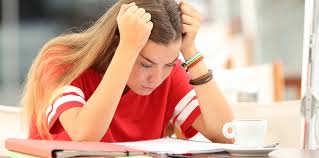
The need to update/upgrade one’s academic status as well as to remain abreast of the current developments in one’s area of specialisation in addition to acquisition of new knowledge and skills are some of the major reasons a handful of people would always want to take-up a second degree programme after undergraduate programmes. These academic programmes majorly are run simultaneously with a full time job thereby creating some very tight schedules and the associated stress that comes with them.
It is right to assume that stress is a part of life for nearly everyone. When people are stressed out, their level of motivation to take certain actions gets increased at some point as the body naturally secrets some hormones under such circumstances. This may help to prompt one to a needed change, or call our attention to something that needs deeper attention. However, stress can also be a red flag for something more problematic and, an indication of a condition which if not addressed immediately could be emotionally damaging or may affect one’s mental health.
To maintain a good mental health, one would need to learn certain techniques that would help to relieve these stress conditions. Some of these techniques include the following:
Firstly, it is important to ensure that one gets enough sleep per day. Nature built the body system and made it mandatory that in every 24 hours cycle, the system needs to go on a rest period called “sleep”. Sleep is as good as food and water for nourishment of the body.
The second technique is to ensure that one gets a good exercise daily. This includes walking around the house as well as other rigorous outdoor exercises. It has been proven that regular exercises help to Lower blood pressure and improve heart health. It also helps to improve one’s quality of sleep as well as reduce feelings of anxiety and depression. All of these effects counteract the effects of stress on the body.
The third technique is to eat healthy meals regularly. When we consume balanced diets it helps to support our immune system and the repair of damaged cells. Balanced diets also provide the extra energy needed to cope with stressful events. The intake of high fibre-foods has been associated with greater alertness and decreased perceived stress.
The fourth technique is to have some time to meditate or some quiet time to relax the mind. This could take the form of yoga or prayers or any form of meditation that takes the mind off the stressors which clogs the mind and causes injury to one’s mental health.
Finally, one can read a book or novel of interest or a journal. One can also watch the news or read a few stories on the social media as a way to relax the mind. Some individuals may also want to gist with friends for a few moments to relieve stress. The length of time spent on these activities has to be intentionally regulated to avoid encroaching into ones’ useful time for work or for academics.
We are all at one point or the other affected by stress, though in varying degrees. One needs to monitor his or her stress level especially where it remains unabated over a long period. If the above technique does not yield a positive result, it is advised to see a doctor for a mental health check-up.