
I learned about Bayes Theorem at last week’s Data Analytics class in my ongoing Executive MBA program at the Lagos Business School. I initially found the subject to be very difficult to understand, but with time and Professor Bongo, our course facilitator’s practical exercises, I was able to understand the basics and recognize the value of this statistical tool.
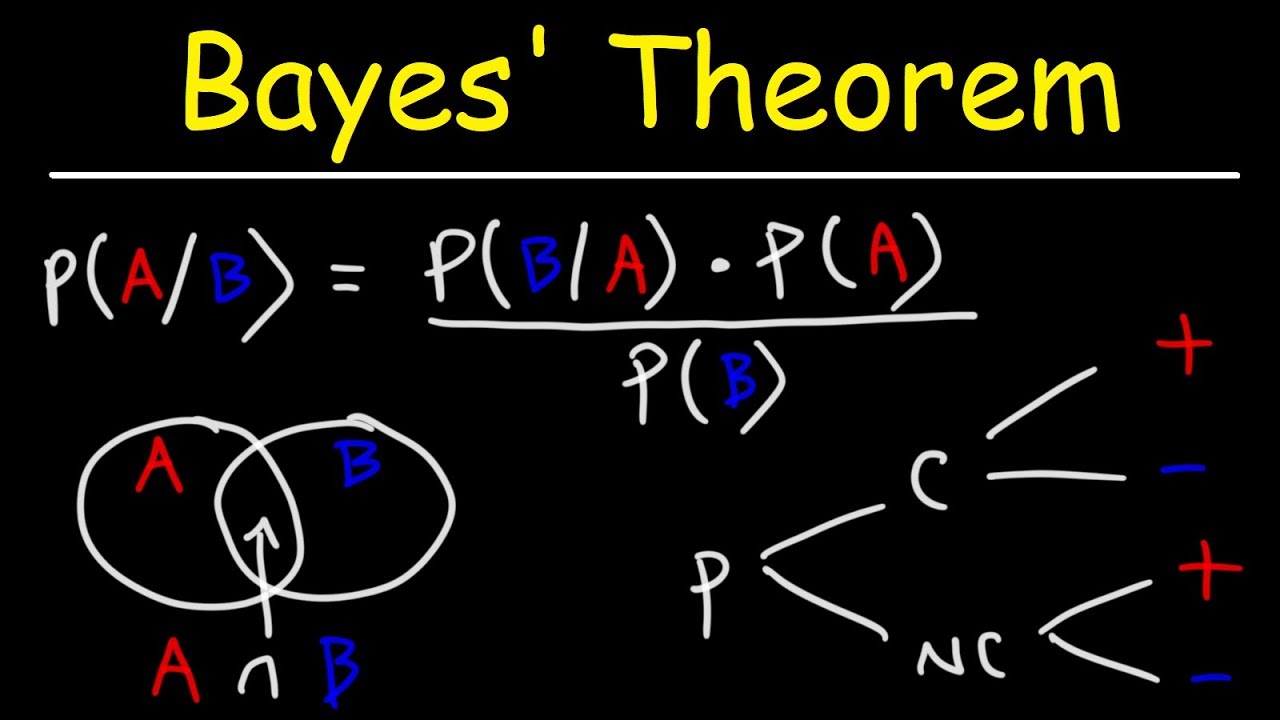
The theorem is based on conditional probability, which is the probability of an event occurring given that another event has already occurred. Bayes Theorem states that the probability of an event A occurring, given that event B has occurred is equal to the probability of event B occurring, given that event A has occurred, multiplied by the prior probability of event A, divided by the prior probability of event B.
The formula initially looked difficult, and most of my classmates had trouble understanding the concept. However, after we realized how the formula worked, it became simpler. Professor Bongo explained that we could modify our beliefs or probabilities regarding an event in light of fresh information or evidence using the Bayes Theorem. According to him, this was especially helpful when working with confusing or questionable data.
One of the practical examples we studied in class was the diagnosis of a medical condition. Suppose a patient goes to the hospital with symptoms that could indicate either disease A or disease B. The doctor performs a test that has a 95% accuracy rate for disease A and a 90% accuracy rate for disease B. The prevalence of disease A in the population is 1%, and the prevalence of disease B is 2%.
Using Bayes Theorem, we calculated the probability that the patient has disease A given that the test result is positive.
P(A|B) = P(B|A) x P(A) / [P(B|A) x P(A) + P(B|not A) x P(not A)]
= 0.95 x 0.01 / [0.95 x 0.01 + 0.1 x 0.99]
= 0.087 or 8.7%
This means that even if the test result is positive, there is still only an 8.7% chance that the patient has disease A. Therefore, additional tests and further investigation are needed to make an accurate diagnosis.
Thinking about the initial example in class, it became clear that finance was another area where the Bayes Theorem could be used to update the likelihood that an event will occur in light of fresh knowledge. For instance, it can be used to update the likelihood of a company filing for bankruptcy if its stock price declines in light of fresh information like financial reports or market trends.
I have, no doubt, gained a lot from learning about the Bayes Theorem and now have a fresh outlook on how to evaluate and understand data, especially when there is ambiguity or insufficient data. It has also helped me understand the value of gathering and evaluating data when making decisions and addressing problems.
No doubt, Bayes Theorem is a potent statistical tool with a wide range of applications. A good understanding is crucial since it enables us revise our beliefs and make more accurate predictions based on the evidence at hand. I am appreciative of the chance to learn about this theorem and its useful applications.




 Cashless Wednesday