
Nigerians trooped out to cast their votes on February 25, 2023, in order to select their next democratic leader for the next four years. Since the return of democracy in 1999, we have witnessed how interesting and stronger our democracy is becoming. People in Nigeria are becoming more enlightened as the democratic process is improving, especially with the approval and implementation of the new electoral act 2022. In 2015 we sow how the incumbent president was defeated, and just recently we witnessed on how the ruling governor in Osun state lost to the opposition party. This development is boosting the confidence of people as their votes have been counted and honored. Although we are not there yet.
Nigerian democracy is no longer business as usual, where some political elite used to dictate our direction by influence our decision through vote buying in exchange of money or items in kind.
However, these issues are drastically reducing due to many factors. In this blog I choose to discuss on the role or impact of social media in Nigerian democracy.
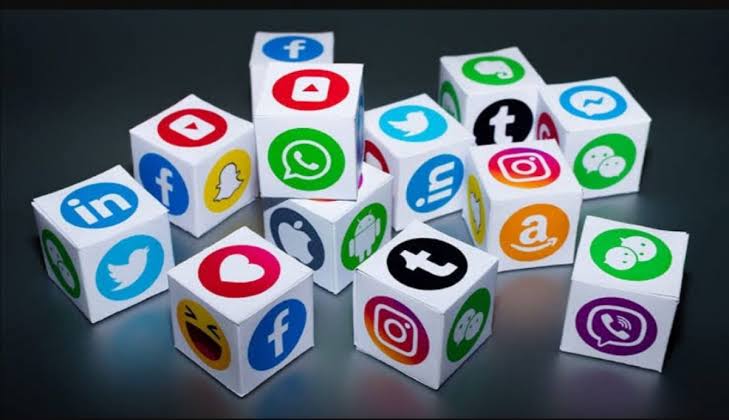
In the digital age, social media platforms have become a powerful tool for political campaigns and mobilization around the world. Nigeria, the most populous country in Africa, is not an exception. The role of social media in Nigerian elections has been significant, with its impact felt in various ways.
Social media has increased political participation in Nigerian elections. With million Nigerians using social media platforms, politicians and political parties have taken advantage of this medium to reach out to voters. Social media has provided a platform for Nigerians to engage with political candidates, discuss political issues and express their opinions. This has led to increased political awareness and participation, especially among young Nigerians who make up the largest demographic on social media.
Another impact is that social media has revolutionized campaign messaging in Nigerian elections. Political candidates can reach millions of Nigerians through targeted advertising, boosting their visibility and message. This has led to a shift in campaign strategies, with more emphasis on digital and social media campaigns. Social media platforms such as Twitter, Facebook, and Instagram have become a critical tool for political campaigns in Nigeria. In recent times, we are seeing people organizing meetings on twitter space and they can pool the population of many people all over the world.
Moreover, social media has been used to verify information during Nigerian elections. With the prevalence of fake news and misinformation in Nigeria, social media has been used to fact-check information and dispel false narratives. Several fact-checking websites such as Dubawa and Africa Check have been established in Nigeria to verify information during elections. While social media has been a powerful tool for political campaigns, it has also been used for voter intimidation. Politicians and their supporters have used social media to spread false information, threaten, and intimidate voters. This has led to voter suppression, especially in areas where there is a high level of illiteracy and low digital literacy.
In addition, social media has been used for election monitoring. Citizen journalism has become a critical component of the electoral process, with social media being used to report incidents of electoral malpractice and violence. Social media platforms have become a tool for Nigerians to hold politicians and electoral officials accountable during elections.
Now that our votes are not transmitted electronically yet, with the aid of social media we use to see the results of poling units being circulated. Even such results are vandalized before reaching collation center, one can argue that there is a copy of such result either in the form of image, video etc.
Once upon a time, in this country, we use to witnessed where INEC would send material to a particular polling unit, both the INEC officials and the materials would be diverted and yet the result of that unit will be announced. However, today with the aid of social media, such things are impossible. Because now the entire process, from the arrival of the INEC official to the counting of results at the pooling unit, everything is being recorded by members of the public and share in the social media. Indeed, the use of social media in Nigerian election has a positive impact.




 SELF-WORTH AND ESTEEM