Corporate Financial Accounting is an essential course for any business executive, regardless of their functional area. It provides a foundation for understanding financial statements, balance sheets, trial balances, T account posting, and accounting adjustment accruals. I have learnt that the balance sheet is also known as the statement of financial position. In contrast, the income statement shows the revenue, expenses, and profitability over a period of time. Prior to this Executive MBA, my knowledge of finance has been quite rudimentary. In this blog post, I would share some of my key learnings from this course at Lagos Business School.
One of the primary takeaways from this course is the importance of Financial Statement Information. Financial statements are essential tools for business decision-making and provide a clear picture of a company’s financial health. There are three key financial statements – the Balance Sheet, Income Statement, and Cash Flow Statement. While the Income Statement reports a company’s profits or losses over a specific period, the Balance Sheet shows the company’s financial position at a particular point in time. The Cash Flow Statement, on the other hand, provides a summary of a company’s cash inflows and outflows during a specific period.
The course also covered the balance sheet, which is a vital tool for assessing a company’s financial health. It shows the company’s assets, which can include cash, investments, property, and equipment, as well as its liabilities, such as loans, taxes, and salaries owed. The difference between assets and liabilities is the company’s equity, which represents the amount of value left over for the owners after all liabilities are paid. By examining a balance sheet, executives can determine whether a company has enough assets to cover its liabilities and how much equity it has.
Another topic we covered was the use of Trial Balance, which is a tool used to verify the accuracy of the general ledger accounts. T Account Posting, on the other hand, is a technique used to record accounting transactions in the general ledger. T Accounts are useful in visualizing the effects of accounting transactions on a company’s financial statements and can help in identifying errors or omissions in the accounting records. T account posting is a useful tool for recording transactions. T accounts show the flow of debits and credits for a specific account.
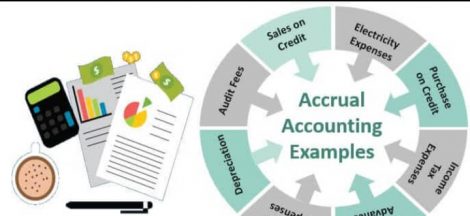
Finally, the course covered Accounting Adjustment Accruals. These are accounting entries made to adjust the financial statements for items that have been incurred but not yet recorded in the accounting records. Accruals help in ensuring that financial statements accurately reflect a company’s financial position and performance. Examples of accruals include accrued expenses, such as salaries and wages, and accrued revenues, such as interest earned on investments.
In conclusion, the course on Corporate Financial Accounting has provided me with a foundational understanding of financial statement information, balance sheets, trial balances, T account posting, and accounting adjustment accruals. As an executive, it is critical to have a basic understanding of these concepts to make informed decisions about a company’s financial performance. I look forward to applying these concepts to real-world situations and continuing to develop my financial acumen.