
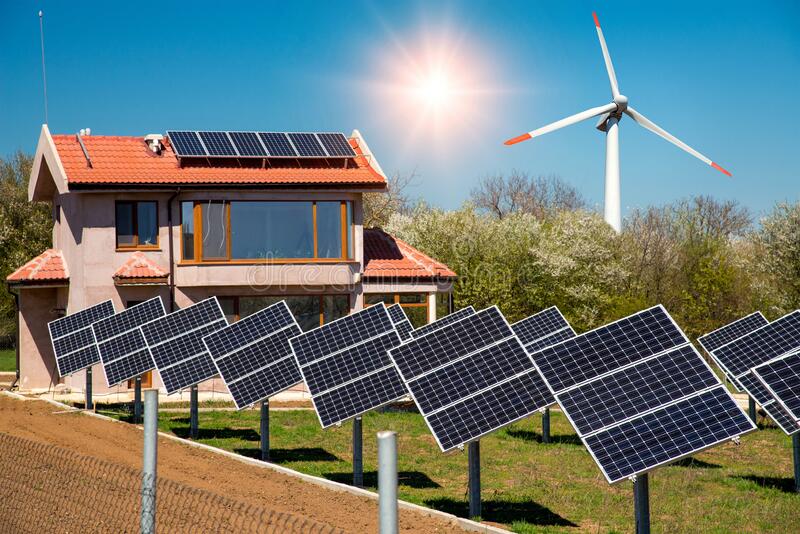
Over centuries, the nation’s major source of electricity was generated by fossil fuels (generic term for non-renewable energy sources) such as coal, natural gas, crude oil, nuclear energy and petroleum products (kerosene, biodiesel and others) which have high carbon content. Those fossil fuels were formed from the buried remains of plants and fossilized animals that existed millions of years ago.
These sources of power cannot be replaced, once consumed, which is a major challenge for humanity. At the same time, the high carbon emissions generated by those fossil fuels are harmful on the nature and the society.
Considering the fact that volume of the fossil fuels is shrinking, the market was urged to develop, enhance the efficiency and scale up the usage of renewable energy such as wind turbines, hydropower, solar and biomass (organic materials such as wood, sewage and ethanol) or hybrid mode. These technologies are considered eco-friendly compared to the conventional high carbon fuels.
In the coming paragraphs, we will shed light on the benefits and advantages of the renewable energy and the side effects, where applicable.
Wind turbines:
The wind turns the blades (kinetic energy) connected to a roto which spins and generate electricity. The system is controlled by highly efficient brakes in order to control the speed during storms and excessive winds as well as for maintenance purposes.
The capacity of a plant (multiple turbines) can range from fifty kilowatts up to hundreds of gigawatts. The production is highly dependent on the seasons and weather conditions. Several studies and weather monitored were surveyed for several years in order to assess and choose the adequate locations of the plants.
One of the challenges facing the wind turbine industry is the noise pollution which affects the animals’ survival and reproduction. The high rate of injury and death of birds travelling through those plants is alarming. Animals living in those lands had to abandon their homeland and left to find safe locations.
Hydropower:
It is known as waterpower, using fast-running water or falling water. This is executed using a dam which is a barrier that stop the flow of water. The reservoir of water will be then connected to tunnels connected from the other end to turbines which rotate and generate power.
A station has a capacity up to twenty megawatts. Those plants are generally located far from the consumers. Therefore, additional costs are inquired to transmit the power to where the demand is high.
Such project, to be constructed, has a very high initial cost and limited to specific geographical locations. To add that the plant cannot operate in full capacity throughout the year, it is dependent to the water volume available (dry seasons has a negative impact on the energy produced).
This technology, other than being expensive, it has many environmental consequences such as destroying forests, running agricultural lands. In many cases, communities and habitat were obliged to leave their lands because of those dams.
Solar (Photovoltaic):
The solar technology uses the energy from the sun (radiation) using photovoltaic arrays, a combination of multiple solar panels. It is flexible and scalable based on the demand. The revolution of this system has changed a lot from efficiency and cost perspective. Since the solar systems till date, improvements were noticed. Whereby the cost of Kilowatt and the needed area has reduced by 60%. The polycrystalline panels (low efficiency) were obsolete and put out of production and now the focus is on the monocrystalline panels (high efficiency) with higher capacity and lesser space. Recently, the bifacial were launched in the market which can generate up to 30% more energy.
This system can be installed for domestic use (using the roof or car park) which can be scaled up to two megawatts. Private consumers can have the options of installing On-Grid or Off-Grid or Fuel Saver.
On-Grid means, the solar system will be connected as well to the utility Grid. If the solar is over-producing power, the excess will be transmitted to the utility. If the solar is under-producing (rainy seasons and nights), then the premises will be powered by the grid. In the end, the owner of the solar will either pay to the utility the difference of energy consumed or the distribution company will pay back to the owner (depends on the scale and usage of power). Such project is less costly because it doesn’t require battery storage.
Off-Grid means, the system operates independently from the utility power and require battery storage for back-up during night. The initial cost is higher than the Off-Grid and require periodic maintenance and replacement of batteries.
Fuel Saver is the combination of solar system with existing diesel or gas generators. A controller is used to calculate the power generated from each of those two sources and regulate the output by maximizing the usage of power from the solar plant.
Investing in solar system will eliminate or reduce the cost of generators maintenance and diesel. It will as well reduce the noise and carbon emission. The user can benefit from a sealed parking space if the solution is installed in the car park.
The key factor is that the solar energy is dependent on the seasons and geographical locations. Periodical cleaning is essential to maintain the highest efficiency of solar panels. However, the shadow from the nearby buildings and trees will have a high negative impact on the solar performance.
In large scale solar farms, a new approach is being used nowadays called “wheeling” which means the solar plant is located in another areas far away from end-users and the power is being transmitted using the existing distribution lines.
Nowadays, the hybrid power is considered to be highly efficient. It consists of the combination between multiple technologies to generate power.
Will you consider any of these technologies in your premises or organization? Thanks for reading #EMBA28.




 WILL MAKING SMART CHOICES EVER RULE THE WORLD?