
Are you a CEO, a CFO, or a company director? Or are you in a position where you make decisions all the time? Do you wish to own a business one day? If your response is yes to all the questions above, then this write up is for you.
Have you taken a moment to ponder why some business decisions you make are always suboptimal to your organisation? You are quite sure you weighed your decisions properly; you considered the pro’s and con’s and you are optimistic that you have gotten it right this time. And alas, the outcome differs from your expectation. And you sit down and beat yourself up for not acting on other alternatives? Please, cry no more as the simplified steps listed below would not only assist you in making better decisions but would also help you see where and how you have been getting it wrong.
The first step is to understand the context of the problem or situation your company is facing. Ensure you have all the information regarding the ongoing issue , get all the facts and ignore the unnecessary details.
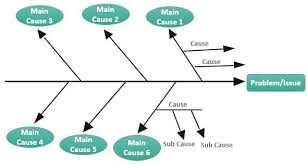
Secondly, you need to define what the problem is. It is very easy to mistake the symptoms of the problem for the problem itself which will definitely lead to wrong decision making. Ignore the noise and the symptoms and identify the actual problem your organization is facing. You might have a situation where customers have stopped patronizing you, goods stay in your warehouse longer than normal and a high level of returned goods. The problem your company is facing is not the decreased patronage or the returned goods, rather find out the why goods are suddenly returned; it could be that they are expired. And so, the root problem here is how to prevent goods from expiring and the reduced patronage itself.
Thirdly, generate the criteria you want your final decision to meet. You really need to be careful here because picking the wrong criteria would not only prevent you from making an optimal decision, but it would also have a negative impact on your organization in the long run.
The fourth step is to determine your alternatives; which are the options or solutions opened or available to you in solving the perceived problem. Here you will need to identify the various options that serves as the solution to your organization’s problem. Remember, they are just alternatives to be explored.
Analysis of the alternatives is the fifth step. Here you will examine each alternative with the criteria you have initially created. You will weigh the benefit of each alternative and the disadvantages.
The sixth step is to make a decision, the big step. Having analysed each alternative with the given criteria, the one alternative that best suit the needs of your company or has the highest benefit for the company is the one you will go for.
And the last step is to create an action plan on how to achieve the decision you have made. Making a decision only will not solve the problem. You need to take a step further to list out the actions that would help in carrying out the decision and to solve your company’s problem.
Easy right? Now you can see where you have been getting it wrong. I follow these steps all the time and it has not only greatly improved the way I see my business problems but it has also helped to resolve them. You wish to have more of this knowledge, take a step further and enroll into any of the programs at Lagos Business School (LBS). The experience is life changing.
Annabel Nzegbule



