
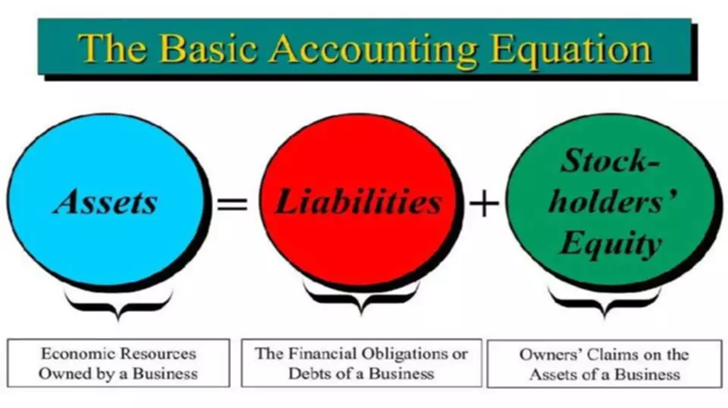
Image source: bookstime.com
Sometimes I wonder how people think about some of the things we “own” as being compared to those things that we “owe”. Accounting concept of double entry seem to have captured this very well and I am beginning to understand this, now that I am back in class attending the Corporate Financial Accounting course at the Lagos Business School, having just being admitted as member of the EMBA 28 cohort.
What we own are the assets and therefore must be on one side of the account while what we owe are the liabilities including the owners’ equity (which the entity owe anyway!) which must be on the other side of the account. Mere doing this, the accountants usually think they have achieved a great feat by telling us that the account have balanced once the value on the right side of the account equals the value on the left side of the account.
Assets are owned to generate more returns for the entities. But because at the initial stage, entities do not have the assets, so they need to owe to generate the assets. Therefore, the amount owed should then be the same as the assets that have been acquired from the funds owed. This seem to be a simple equation which was well thought-out by the accountants!
The simple equation is then: Assets equals Liabilities plus owners’ equity. This has resonated with me since the first day I attended that class. I have also been able to rationalize all my actions to reflect the accounting equation. All that I do now seems to revolve around the accounting equation. How can I explain to you that in earning the salary which my company owed me, they must own my effort and time. That really sound amazing! Could that be true? Well, maybe I will get confirmation of this after my graduation when I will be analyzing the financial statement of my company. But I just hope it does not get more complex that this.
During that session, Professor also told us about the profit and loss account which he also called income statement. But I wonder why income statement, why not loss statement? Was it because it is expected that entities must make profit, or could it be just that the income comes first on the statement? I have thought about this and shall be engaging Professor at the next session. Trust me. But having said that, this statement simply show how the resources are put to use to generate returns and also the associated cost used to generate such returns. The net result is either the “profit” or “loss”. This seem to make a whole lot of sense to me as I will also endeavour to prepare my Income statement before the next class at least to show if I am making profit or loss from my private activities.
Lest I forget, he mentioned balance sheet. This he explains shows the position at a particular point in time. But why “balance” though? I think it is because it must always balance. Since the accounting equation must balance and what was contained in the balance sheet are basically the assets, liabilities and owners equity. Now it make sense to me that the accounting equation is the best thing to have happened in the world of Accountants and indeed all of us.
Well done sir!
SGD




 From JAPA to LBS; a confectionery learning