
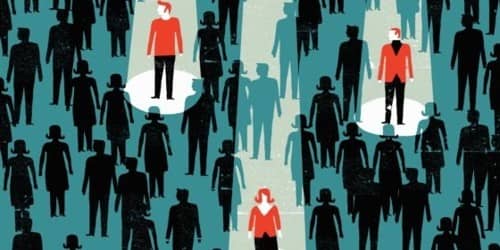
Man is a social being, one that cannot find fulfilment in isolation. He need interaction with his peers, family and his loved ones. This love and care he gets from others can be likened to an oil that keeps an engine alive.
Many economists adopt a human-being model that posits men are radical individualists whose sole goal is to maximize their own individual self-interest. As we have already shown, while this image of man may be useful for economic modelling, it is completely insufficient for professional managers who must oversee real human people. One of the primary reasons that this definition of man is inadequate is that man is not a radical individualist; rather, man is a social being who can only live, develop, and attain ultimate fulfilment by living in society and cooperating with other human beings.
Developing close interpersonal relationships is an important part of human fulfilment in and of itself. Furthermore, other components of human fulfilment, such as knowledge and skill acquisition, may only be grown to a very limited level by one individual alone; they can only be fully developed in accordance with their potential in vast groups. Beyond that, we require other people not only for what we gain from them, but also for what we must give and share in order to achieve our own fulfilment. There can be no personal growth apart from the needs of those around us.
A husband matures and finds fulfilment as a father and by providing for his wife and children; a lawyer will only be a brilliant lawyer if he provides for his wife and children and make positive contribution to securing his clients’ legal rights and to the creation of a more legally structured society, and so on.
Man is said to be a social entity for these reasons, and the goal of employing this The expression indicates that he cannot find fulfilment in isolation or if he limits his concerns to the pursuit of his narrow personal interests
COVID-19 Experience
On the covid-19 era experiences. A father was in his late forties, while the son, a university student, was in his adolescence.
The father outlines his concerns, including his children’s location and their refusal to return home. He also joyfully described how well his business prospered during the time period. He works in retail, and his products were in high demand during the’stay at home’ orders. Even if he couldn’t do business every day, the few days he could were worthwhile. The enthusiasm remained after covid, and he has been eager to do more for the family.
The son is concerned. The most notable were feelings of inactivity and acclimating to the new order There were far too many idle days, which was clearly an issue for a teenage lad. The new order required him to attend school classes online and have limited movement. He mentioned how he always believed online classes were insufficient and that he didn’t enjoy them.
Finally, a recurring feature in their account was that they were primarily concerned about things that harmed them but were beyond their control. Nobody cared about the spread of the fatal covid-19 illness or what was going on in other regions of the planet.
The COVID-19 epidemic has spread to other important businesses, such as global trade, and is no longer solely a medical problem. The International Trade Organization acknowledged this reality, declaring that because output and consumption are being lowered globally, the epidemic poses an unprecedented disruption to the global economy and world trade.
The COVID-19 pandemic has highlighted inadequacies in global health systems and their failure to meet the demands of their varied populations in a timely manner. Indeed, the COVID-19 pandemic has drawn attention to the importance of rapidly developing new vaccines to combat emerging viruses that cause infectious diseases or epidemics.




 What are Intrinsic and Extrinsic Goods?