
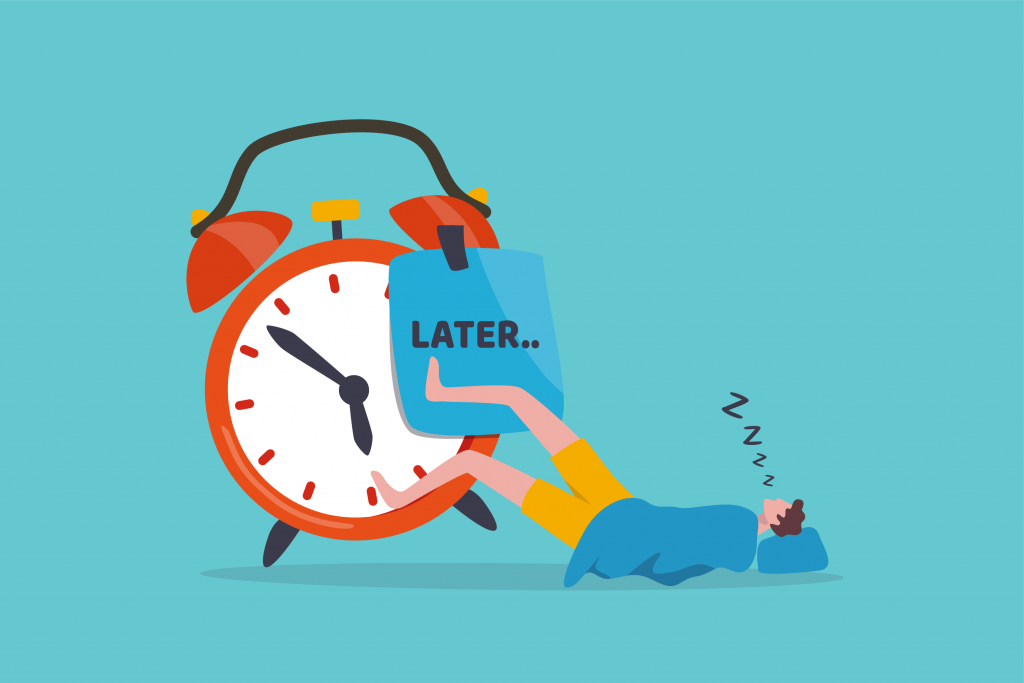
It’s another Friday, the clock is ticking, and your fingers are jumping from one key to the other. You’re working furiously, your five o’clock deadline is nearing, and the weekend is just around the corner.
But you’ve still got much to do and less than an hour to finish. You silently curse yourself for not starting sooner. So, what happened? How did you end up running out of time?
Well, there were hours you spent scrolling through social media, your multiple coffee breaks, re-reading emails, and completing tasks that you could’ve started later.
Procrastination haunts all of us. We’re all guilty of procrastinating and saying, ‘I’ll do it later,’ or ‘I’ll start in a while.’ But the negative impacts of procrastinating can steal dreams, cause missed opportunities, and even destroy lives.
Some people are lucky enough to pinpoint their tendency to procrastinate and how much it holds them back.
What does Procrastination Mean?
To procrastinate means to intentionally and habitually delay or put off doing something till a later time.
Why is Procrastination the Thief of Time?
Time is an essential aspect of our lives. Procrastination leads to the loss of precious time. Time once lost, is lost forever. It can never be regained. With time, gone will be the opportunities that come with it. You will never acquire those opportunities again. The more we hesitate to do the thing now when it is supposed to be done, the more we tend to lose out. Time is also associated with money. By rescheduling things that can be done today to tomorrow, we may have lost what we could have gained today and tomorrow. Nothing that you do can ameliorate the situation. Procrastination robs away the treasures that time brings us.
Some people have a penchant for procrastination and believe that it provides them with the adrenalin to do their tasks last minute. But this doesn’t work for everybody or every situation. We must also realize that we are not living in isolation and that what we do or don’t do will have a ripple effect on other people in our lives. That, by itself, is a selfish and egotistic attitude.
Let’s discuss the top common examples of procrastination:
- Someone who spends several days thinking about starting an essential assignment, thus they have to rush to finish work in a hasty and stressful manner.
- A person who wastes months before approaching the person they’re romantically interested in, thus missing their chance to enter a relationship with them.
- Someone who wastes years before starting a project they’re passionate about, thus struggling with guilt and shame.
- A student who wastes the whole year not studying.
BENEFITS OF BEING PRO-ACTIVE
Starting on your task early allows you time to plan better, gather information, and make modifications or improvements to your work. This will not only eliminate errors but will improve the quality of your work. In this era where quality is of the essence rather than quantity, we cannot be more prudent than ensuring excellent work. Quality work doesn’t come by chance. You need to put in the effort to churn out quality and creative work. There are no shortcuts to this. So, if you start early, you have a better chance of producing a superior job.
If you are punctual and complete things on time, you boost your self-esteem and people will respect and trust you. A person who works hard and does not procrastinate will be more successful in their career, studies, relationship, and life.
CONCLUSION
Procrastination is a debilitating illness that can rob you of your success both in your studies and in your career. It’s always better to err on the side of caution than to regret it for the rest of your life. Starting work early will not cost you anything but can help you do your job better and more efficiently. Submitting an assignment or job before the due date may give you chance to modify your work based on feedback from your teacher or supervisor. People can forgive you better if you allow them time to make suggestions for corrections than if you cause them more problems due to your mediocre work. Dilatory work does not benefit anyone and in fact, could harm everyone. If something needs to be done, even if the deadline is still far away, it is best to act quickly to accomplish it. This will not only lessen the number of tasks that you have to complete, but it will also de-escalate your worries. Too much worrying over things can lead to a whole host of mental and emotional issues.
Have an amazing weekend.




 Overview of Nigeria and South Africa’s Banking Industry.