
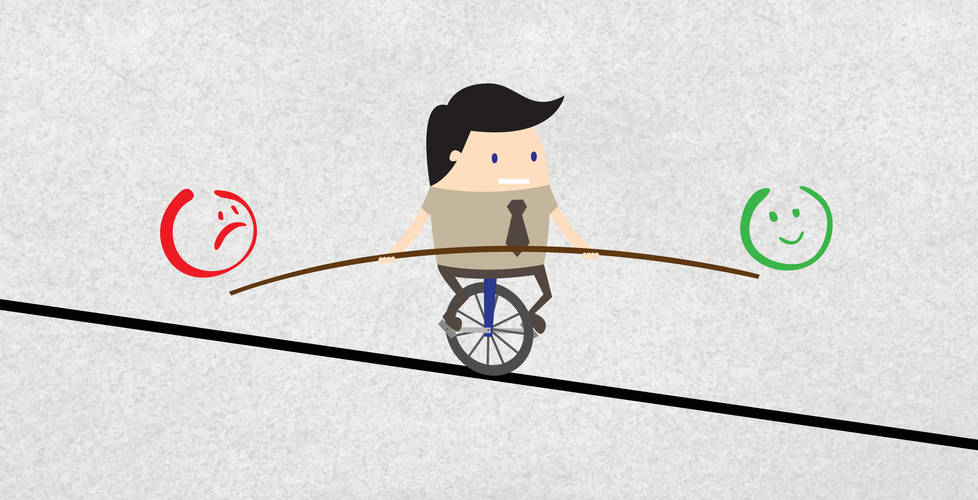
A firm has a number of responsibilities. Two of such responsibilities include;
i. Responsibilities to shareholders
ii. Responsibilities to it Employees.
Who are shareholders?

Shareholders can be said to be individuals, companies or institutions that own at least one share of a company’s stock. Basically, shareholder own the company. With their ownership comes rights, privileges and responsibilities. All firms have a responsibility to protect the interest of their shareholders. After all, they (the shareholders) have an equity in the business; their financing is part of what keeps the business running. No business wants to be guilty of “biting the hand that feeds you”.
Who are Employees?

An employee is a person employed by a firm for salary or wages. In other words, it’s someone who gets paid to work in a company. These workers can be full time, part-time, or contract staff. What are the responsibilities a company has to its employees? The employees are those within the company working to achieve its goals. You can say that they make the shareholders’ money work. While they may not be shareholders, they are “stakeholders”. The fact that a firm is a human community in which employees are members also brings into the picture mutual duties of loyalty between employer and employees: ideally the employee should be committed to the attainment of the organization’s objective and the organization should be similarly committed to the personal and professional fulfilment of the employee. An underlying foundation for this is the fundamental principle of ethics that says that humans have value and dignity.

The Tony Ridder Dilemma
Tony Ridder became CEO of Knight Ridder, a News publishing company, in 1995. Knight Ridder is a prestigious multi award-winning company that had built a reputation for integrity and concern for the public good. Its two main newspapers competed with top papers in the USA. There was a problem though; Knight Ridder did not have the protection of what’s called a two-tiered ownership system, which basically gives voting control of the company to outsiders-usually founders’ families. What this means is that the company is exposed to the pressure of shareholder demands.
Tony Ridder began to feel the brunt of this pressure ever since he stepped in to his position as CEO. In order to alleviate this, he focused his efforts on the improvement of the company’s financials, boosting stock prices from $26 in 1995 to $62 in 2000. Despite this, shareholder demand continued to rise, calling for cuts in operating cost and boosts in profit margins. This eventually led to company-wide layoff of up to 2000 employees, including long-serving exceptional ones. Now Tony is caught in between a rock and a hard place of sorts; the demands of the shareholders and an increasing number of displeased employees. Compounding this goulash is the presence of the vicious Wall Street press. Keeping in mind our introduction into a firm’s responsibilities to both parties, shareholders and employees, how well can we say Tony Ridder played this game?

While it may seem that Tony Ridder lived up to shareholders’ expectation by focusing on the company’s financial performance after he became the CEO, in terms of responsibility to employees, he failed by excessively downsizing within the span 5 years. Although he did mention that that he was dedicated to quality delivery as a company, the layoffs tell a different story. In a situation where employees are not confident in their job security within a firm, how can they give their best? Yes, no company is for loss; profit maximisation is important. However, it must be said that profit “at any cost” is fundamentally unethical. Especially when the employees become fodder for the achievement of this purpose.

My advice to Tony would be to re-examine the purpose (vision and mission) of the organisation as a whole. What is their goal as a news agency? How can they achieve it and be profitable? The firm has already built a solid reputation over several decades. He can and should communicate these goals and their importance to shareholders. He can also take the route of bringing in potential shareholders who understand the value the firm is bringing and recognise the need for employee security. The presence of such shareholders would counterbalance the effect of the others who put harsh demands on him. In addition to these, he should seek to secure the place of employees within the organisational structure.



