
The majority of us learned fundamental mathematics in the form of the sentence “1 plus 1 equals two.” But not everyone finds the topic fascinating. What’s this? I struggle with math as well. During my foundation years, I did the best I could and kept up. That, in my opinion, is one of the causes for my lack of a degree in science, accounting, finance, mathematics, or advanced mathematics.
I then made the decision to increase my education and signed up for the Lagos Business School. Sincerely, I had no idea that numbers would continue to find a way to manifest themselves in my life. Thankfully, Professor Akintola Owolabi was able to teach my class and I, we all had the honor of learning from such a distinguished faculty member. He guided us through the accounting for business finances while being patient with us.
You can count on me to overlook the financial figures in annual reports of firms since I don’t understand them, especially with all the numbers. I can confidently tell that the narrative has changed today. To decide whether a firm is viable and worth investing in, please study the financials. Numbers do not lie, I assure you. For your understanding, let me share what I’ve discovered about financial statements.
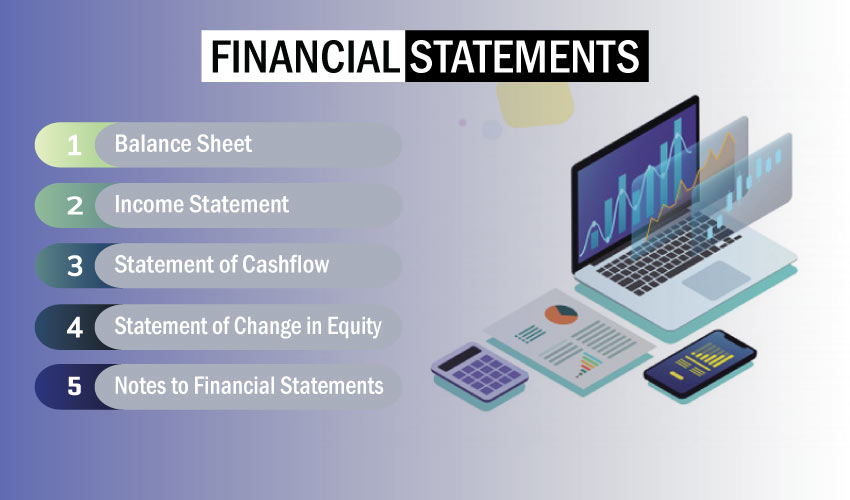
A balance sheet or statement of financial status shows a company’s financial situation at a specific point in time (mostly at the end of the year). The annual reports of many businesses contain the four financial statements plus one. The balance sheet, which serves as the foundation for the accounting equation assets = liabilities + owners’ equity (A = L + OE), includes the company’s assets, liabilities, and owners’ or shareholders’ equity. Assets encompass anything that a company owns, including real estate, money, and other items. Long-term loans and all other types of payment transactions are referred to as liabilities. Owners’ equity is the investment or ownership stake made in a business, and it is available to shareholders or owners after all obligations have been subtracted.
An income statement, often known as a statement of profit or loss, lists the revenues and costs incurred by a business for a specific time period. Money entering the business is referred to as revenues, and money leaving the business is referred to as costs. Under the income statement, all of these are tracked. The company has generated a profit when we deduct costs from sales and the result is positive. If the result is bad, though, a loss has been caused.
An enterprise’s current share capital and any changes that took place over that time period are both reflected in a Statement of Changes in Equity. Withdrawals, dividends, and net income are some examples of the subtractions and additions for a certain time frame.
As its name implies, the Statement of Cash Flows shows where all the money went throughout the financial year under consideration. That demonstrates how money is used in an establishment’s everyday operations and what it is spent on. We get the information for the cash flow statement from the balance sheet and income statement.
The “plus 1” notes, commonly known as the notes to the financial statements, are crucial for understanding the four financial statements and business performance. The four financial statements would therefore be considered incomplete without it.
I’m grateful that I have the chance to learn this material, and I hope you find it useful and gratifying. Yes, additional updates on my financial journey since graduating from Lagos Business School will be released soon.
#MEMBA11



