
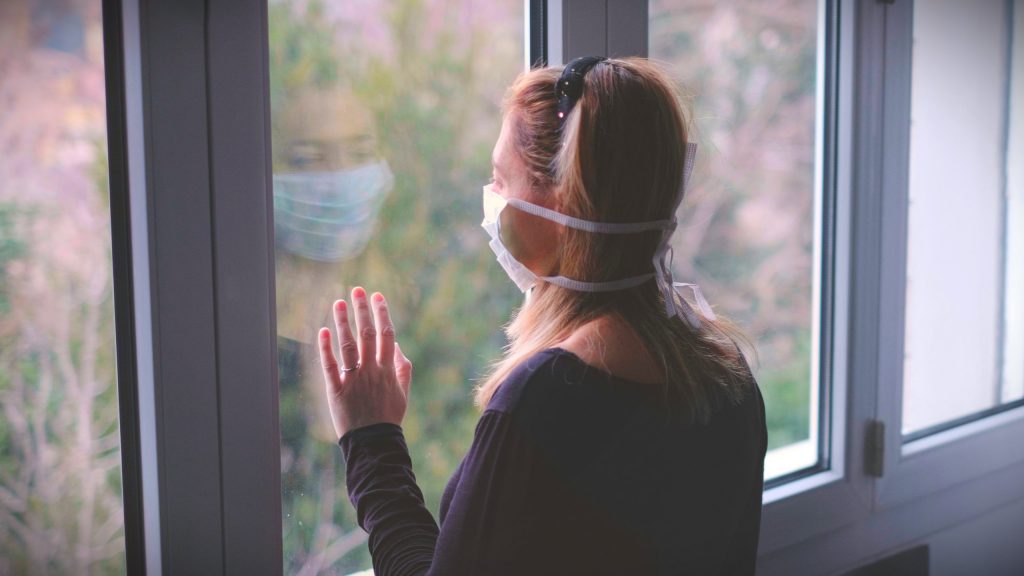
Man isn’t meant to thrive or dwell in isolation. Interaction and contact with other human beings make up a very crucial part of our human existence; we’re social beings by nature. In the midst of the Covid-19 pandemic, one of the ways through which governments across the world sought to control the situation was by implementing isolation and quarantine measures. In many countries, daily movements were restricted, businesses temporarily closed, social gatherings banned. Shanghai, a major global financial hub, was under a lockdown imposed by the Chinese government, for two months1. One of the things that the Covid-19 pandemic has caused many us to recognise is the indispensable value of human interactions.
To illustrate this, let’s examine the following interaction with a young couple on their overall covid-19 experience and challenges.
Wife (a mother of one child and an adjunct lecturing staff at the Lagos State Polytechnic):
‘My daughter was born at the beginning of the pandemic. The lockdown did benefit me in the sense that it gave me ample time to spend with my new-born daughter; time that would otherwise have been occupied with work-related issues. However, there was a downside to it as well. I was unable to go out, move about freely, visit friends that I used to prior to the pandemic. Personally, I’d call it a 50/50 experience. Although I did have that time with my daughter, not have people around to relate with or even assist me during that early phase was a bit draining.’
Husband (father of one and a full-time lecturer at the Lagos State Polytechnic):
Asides the challenges mentioned by my wife, as an academician, my work was impacted by the pandemic thusly;
- We were forced to transition to a mode of teaching that we were neither ready nor equipped for infrastructurally; that is to say the audio-visual online teaching mode. This consumed more of my time.
- My time was consumed by the new work mode and family, reducing the time I had to be able to develop myself academically with respect to generating research content.
- On the upside, we were well-off because the funds and salaries were not affected by the pandemic and came in regularly.
- However, we did consume more food items at home due to being around more than before. Hence, we spent more on groceries.
Observation:

Based on the information shared above we do find two sides of the coin with respect to their individual COVID-19 experiences. While there were upsides with respect to having more time on hand to dedicate to family, and this was something both parties recognised and appreciated, there were things that they both felt were missing. One of the major things that stands out is the reduced contact with friends and extended family. This highlights the very crucial aforementioned point that we can link to a fundamental aspect of human nature: Man is a social being. Being able to socialise, and by socialising I do not mean the attendance of events and parties but being able to relate, connect and bond with friends, loved ones and family consistently, is a very vital part of what it means to be human; in both parties here, we can clearly see that it was recognised as missing. Inasmuch as there are times when we may step back to focus on given tasks, it is usually for a short period and also of our own volition. And when the task is complete, we resume our regular cadence of socialising. For man is not designed to walk alone but in companionship, friendship and intimacy.
1. Shanghai lockdown: China eases Covid restrictions after two months – BBC News. (n.d.). Retrieved November 5, 2022, from https://www.bbc.com/news/world-asia-china-61647687




 5 “W”s of your later career years…