
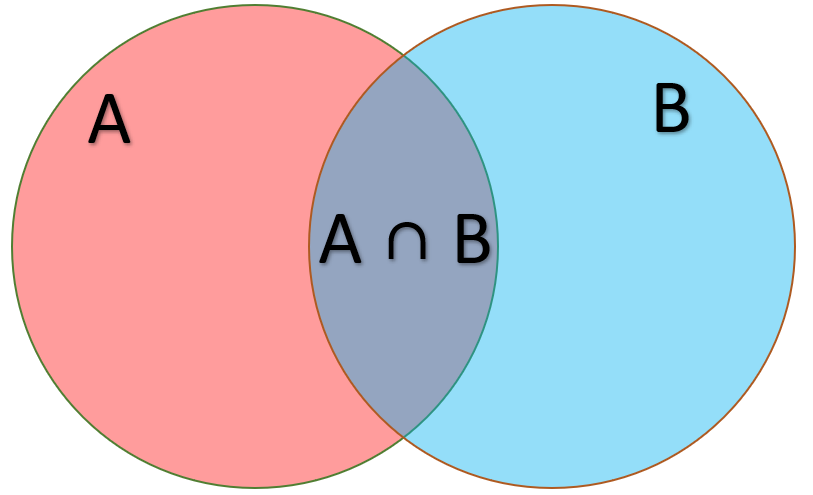
Probability is the likelihood of an event occurring. It is a measure of the chance that a particular event will occur. This is particularly useful because though the likelihood that any of life’s many events will occur can be predicted, it cannot be predicted with utmost certainty. The probability of an event is therefore usually expressed mathematically as a number between 0 and 1, where 0 indicates impossibility of the event’s occurrence while 1 indicates certainty that the event will occur. The probability of an event A occurring is represented by P(A). The probability of all events in a sample space adds up to 1.
Types of Probability
The following are the three major types of probabilities.
- Theoretical: This is also known as Classical or A priori type of probability. It is based on equality in the chance of winning. For instance, if we toss a fair dice, there are six possible outcomes and each outcome has an equal chance of occurring.
- Experimental: This is usually based on observations made from an experiment. We want to find the number of possible outcomes from the total number of trials made. For instance, if a coin is tossed 6 times and the head is recorded four times, then the experimental probability for heads is 4/6 or 2/3.
- Axiomatic: This refers to a set of rules or propositions. It is done to quantize the event and hence to ease the calculation occurrence of the event. The chances of occurrence or non-occurrence of the events can then be quantified. The first axiom of probability is that ‘the probability of any event is between 0 and 1”.
Conditional Probability: This refers to the likelihood of an event or outcome occurring based on the occurrence of a previous event or outcome.
Equally likely events: when events have the same theoretical probability of happening. For example, if you throw a die, the probability of getting a 1 or 2 is 1/6 in each case.
Complementary Events: the probability that there will be only two outcomes, that is whether the event.
Important Terms in Probability
Sample space: This refers to the set of all the possible outcomes to occur in any trial.
Sample point: A sample point refers to
one of the possible results.
Experiment or Trial: This refers to a series of actions with uncertain outcomes.
Event: This refers to a single outcome of an experiment.
Outcome: This refers to the possible result of the experiment.
Complementary event: The nonhappening events. The complement of event A is the event, not A (or A1).
Impossible event: The event cannot happen.
The Probability Formula: The probability formula is defined as the possibility of an event happening being equal to the ratio of the number of favorable outcomes and the total number of outcomes.Probability of event to happen P(E) = Number of favorable outcomes/Total Number of outcomes.
Uses
Probability can be used for forecasting weather changes
It can be used for modelling in various industries
It can be used for predicting hikes in share prices in the stock market
#MEMBA11



