
Across the globe, Business Schools generally adopt a case study approach to learning. This methodology is so profound, as it gives students the opportunity to learn by solving real-life type business problems. It fosters practical learning.
The case study approach was employed throughout the Analysis of Business Problems (ABP) module in my first semester at the prestigious Lagos Business School (LBS).
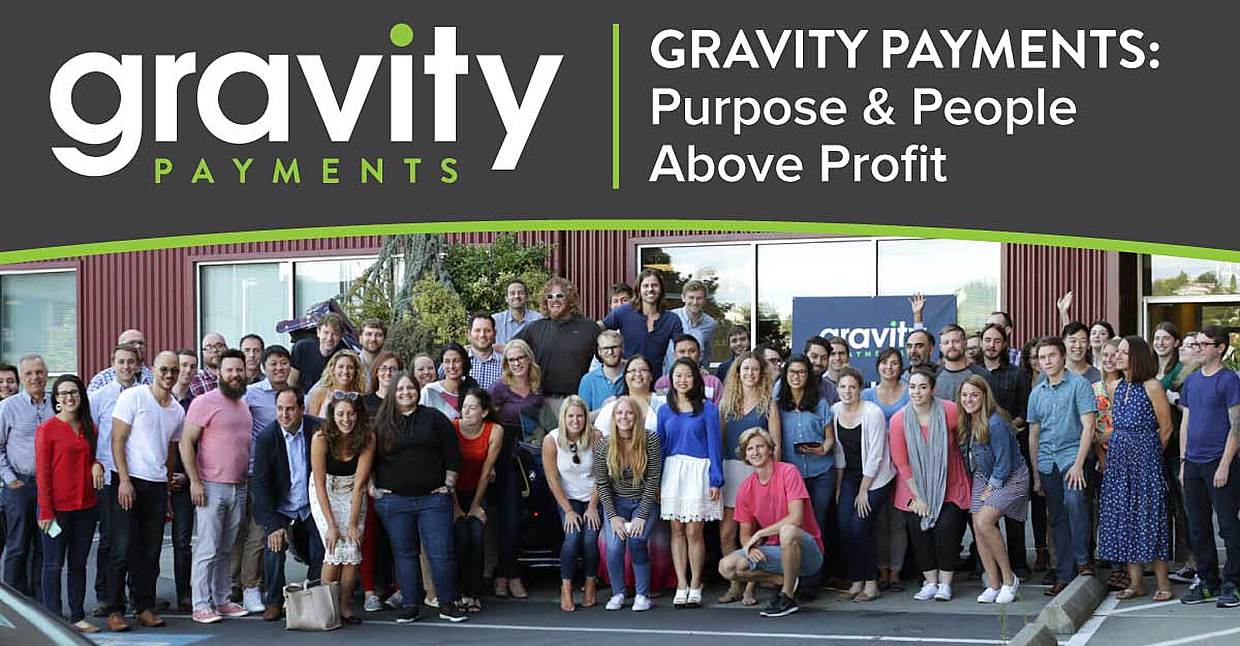
Today, I’d like to share my evaluation of the case study – Gravity Payments, and the company’s $70,000 Minimum Salary Policy. The case is focused on ethics and stakeholder issues in decision-making.
Background
Gravity Payments is a company established in the United States that specializes in credit card processing for small and medium-sized enterprises. It was founded by Dan Price and his brother, Lucas. The company’s mission was to provide low-cost credit card processing, transparent pricing, and exceptional customer service to small independent businesses. Evidently, Gravity put the needs of its customers ahead of profits. Besides its core credit card processing business, Gravity also administered gift and loyalty programs. The company was also involved in several philanthropic initiatives. In addition the company culture prioritized employee development and wellbeing.
The Issue of Income Inequality
There had been an ongoing national conversation on income inequality in the United States. Dan decided to embark on the change he was seeking starting from Gravity. Guided by his philanthropic disposition, as well as the Kahneman & Deaton research, he sought to raise the wellbeing of his employees. In 2015, he unilaterally increased the minimum salary at Gravity to $70,000. His philosophy was that every dedicated employee deserved, at the very least, a middle-class lifestyle.
Reactions to the Revised Minimum Wage Policy
The new policy had mixed outcomes. Whilst the decision was received with great enthusiasm from employees and the media, however, some negative reactions ensued after the initial excitement.
Some of the positive and negative reactions are:
- Resignation of 2 key staff
- Some of the employees that got a pay raise were experiencing impostor syndrome
- Increased cost of labour, that is, 75% – 80% of the company’s $2.2million revenue
- Lawsuit from Dan’s brother, Lucas
- Some clients left Gravity in anticipation of a fee increase, and 4,000 new clients joined, that is, a 55% year-on-year increase in customer acquisition.
- The company became attractive to talent
- High social expectations on the employees of Gravity
- CEOs in the same industry were disgruntled and felt that Dan’s gesture would place them in a bad light.
Problem Statement
Dan Price experienced unexpected adverse reactions from Stakeholders due to the salary increase at Gravity Payments.
Objective
Manage the reactions of the various stakeholders of Gravity Payments.
Stakeholder Analysis
- Media: (High Power / Low Interest) – Keep satisfied.
- Customers and Employees: (High Power / High Interest) – Actively engage.
- Lucas Price (Minority Shareholder): (Low power / High interest) – Keep informed.
- Peer CEOs: (Low Power/Low Interest) – Monitor.
Recommendations – What could Dan Price have done differently to better balance the interests of all stakeholders involved?
- Although Dan should have engaged the minority shareholder in the decision-making process. However, he can utilize data to show the increase in customer acquisition and its projected impact on the company’s profits.
- Dan should have carried out a viable budgeting process/financial plan, rather than having to take a pay cut to support the wage increase. Whilst ethical initiatives are commendable, it must be executed with proper planning.
- He should have anticipated stakeholders’ reactions and prepared a plan to mitigate these adverse reactions.
- Dan should have informed stakeholders before engaging the media. Nevertheless, it is advisable that he continues to grant interviews regularly and do various PR campaigns.
- He should host a town hall meeting to engage employees and explain the rationale for the decision. Also, he ought to express appreciation for the contributions of the high-earning employees and reinforce that the company values their contribution to the bottom line too.
- Customers should be engaged through different channels like emails and other media. Reiterate that the fee charges would not increase and follow up on the customers that took their business away.




 Be Inspired